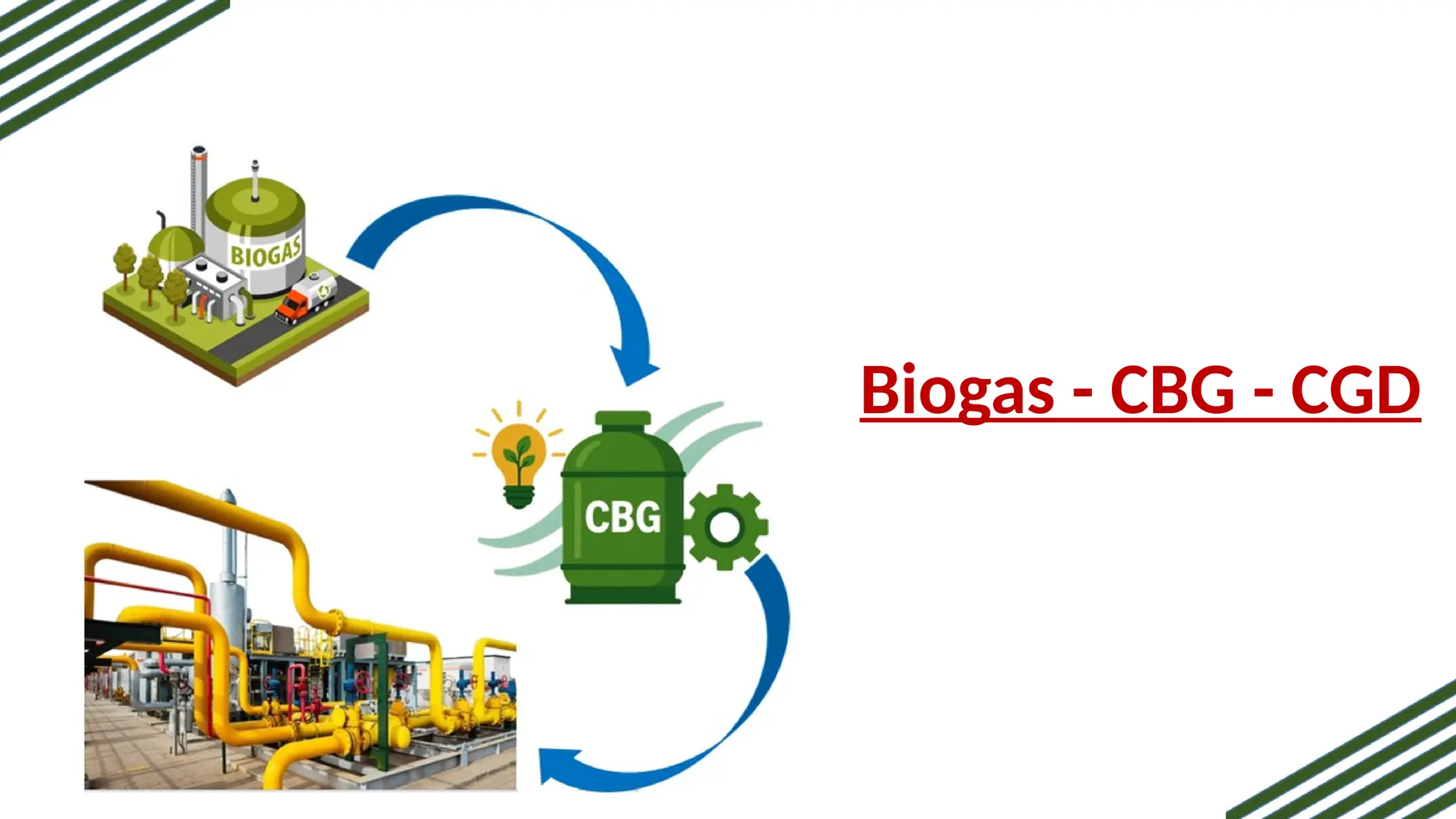
About CBG
Compressed Bio Gas (CBG) is a renewable, clean gaseous fuel produced from organic and agricultural biomass, including sugarcane by-products (press mud, bagasse, cane trash), maize residues, rice straw, paddy straw, and other crop residues, as well as agro-industrial waste. CBG has properties similar to Compressed Natural Gas (CNG) and can be used in transport, industry, and households.
CBG is produced through the anaerobic digestion of biomass, wherein organic material is broken down by microorganisms in the absence of oxygen to produce biogas. This biogas is then purified and compressed to remove impurities such as CO₂, H₂S, and moisture, resulting in high-purity methane-rich CBG.
Role of CBG in India’s Bioenergy Ecosystem
Helps prevent crop residue burning, especially paddy straw
Provides an additional income stream for farmers
Supports waste-to-wealth and rural entrepreneurship
Reduces dependence on imported natural gas
Benefits of CBG
Cleaner fuel with lower greenhouse gas emissions
Energy security through indigenous fuel production
Efficient waste management for agro-residues and by-products
Bio-slurry used as organic fertiliser
CBG complements ethanol, SAF, and other biofuels by creating a diversified and resilient bioenergy portfolio, supporting India’s transition towards sustainable and low-carbon energy solutions.
Flow Chart: CBG Production Process
Agricultural Residues / Sugarcane Bagasse / Maize & Rice Straw / Other Biomass
⬇
Collection & Pre-Treatment
(Cleaning, size reduction, removal of impurities)
⬇
Anaerobic Digestion (Biogas Production)
(CH₄ + CO₂ + minor gases)
⬇
Biogas Purification / Upgradation
(Removal of CO₂, H₂S, moisture)
⬇
Compression
⬇
CBG (Methane-rich Compressed Bio Gas)
Distribution & Use
Transport fuel for vehicles (CNG-compatible engines)
Industrial energy use
Domestic applications
By-Products
Bio-slurry / Digestate → Organic fertiliser for farms