
If you walk through India Energy Week 2026 in Goa, one thing becomes very clear very quickly.
The biofuel story is no longer only about production volumes. It is now about technology, precision, and smart systems working quietly in the background.
In 2026, the modern distillery looks nothing like the old stereotype. It operates more like a bio refinery, driven by data, automation, and continuous monitoring. At the All India Distillers’ Association, this shift is seen as essential, not optional. Supplying clean fuel at a national scale means every unit of energy, water, and feedstock must be used carefully.
The Smart Factory Is Already Here
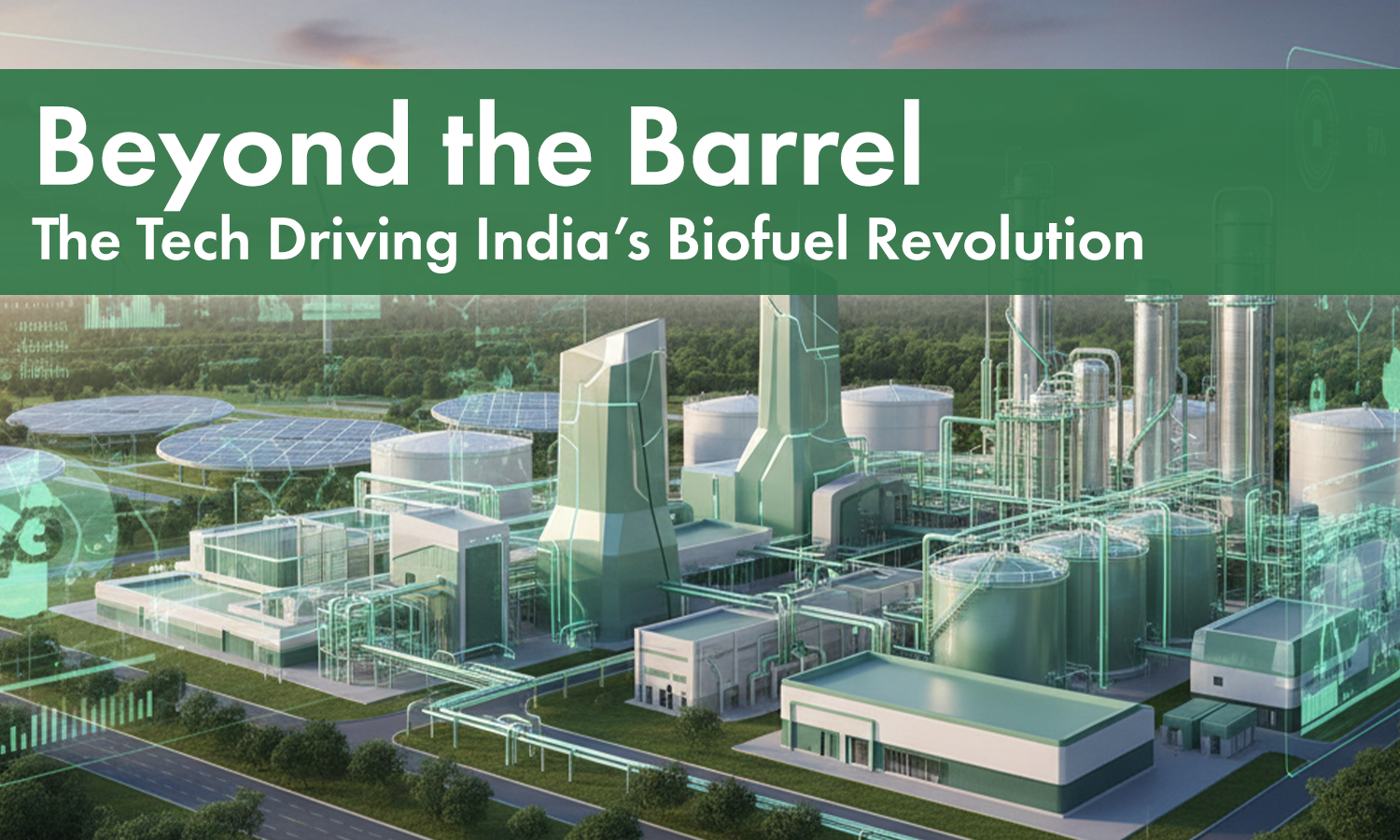
Today’s distilleries run on real-time data based on smart factory technology. Sensors track temperature, pressure, fermentation activity, and water quality around the clock. AI in manufacturing helps plant teams make small adjustments that add up to big efficiency gains, improving the ethanol production technology.
Many distilleries or Bio Refineries in India now use AI-driven fermentation controls to monitor yeast health and sugar conversion. This helps extract more ethanol from the same raw material, without increasing water or energy use.
Environmental monitoring has also gone digital. Online Continuous Effluent Monitoring Systems stream live data directly to regulators. This ensures compliance is not a once-a-month check but a daily operating discipline. Zero Liquid Discharge is no longer a target. It is the baseline for this ethanol production.
2G Ethanol Is Changing the Equation
One of the most discussed technologies at India Energy Week this year is second-generation ethanol.
This is where innovation really stands out. Advanced enzymes and processing techniques now allow distilleries to break down agricultural residue such as rice straw, cotton stalks, and other crop waste. Material that once caused seasonal air pollution is now becoming a fuel source.
This shift does two important things at the same time. It reduces the practice of stubble burning, and it adds fuel capacity without touching food crops. Farmers also gain a new income stream by supplying residue for the second-generation ethanol in India that earlier had no economic value.
For India, this technology matters because it turns a long-standing environmental problem into an energy solution.
Innovation Is Also Happening on the Road
The technology story does not stop at the factory gate.
Flex Fuel Strong Hybrid vehicles are now becoming a practical reality. These vehicles combine electric motors with engines designed to run on higher ethanol blends. The result is lower emissions, better fuel efficiency in city traffic, and no need to wait for charging infrastructure everywhere.
This approach works well for India because it builds on existing manufacturing strengths. Instead of replacing everything at once, it improves what already exists. Ethanol and electric power work together rather than competing with each other.
Why Knowledge Sharing Matters
Technology only delivers impact when it spreads evenly across the sector.
A key role played by AIDA is ensuring that innovation is not limited to a few large plants. Through technical committees, workshops, and shared operating frameworks, newer technologies like Zero Liquid Discharge systems, advanced evaporation methods, and enzyme optimisation reach smaller distilleries as well.
In 2026, data is also becoming a compliance and revenue tool. Carbon intensity tracking helps distilleries understand their emissions and prepares them for participation in India’s emerging carbon markets.
Conclusion
India’s biofuel transition is no longer driven only by policy targets. It is being powered by technology that works quietly, efficiently, and at scale.
At India Energy Week 2026, the message from the distillery sector is simple. Clean fuel is not just about what goes into the vehicle. It is about how that fuel is made, measured, and improved every single day.