
Overview
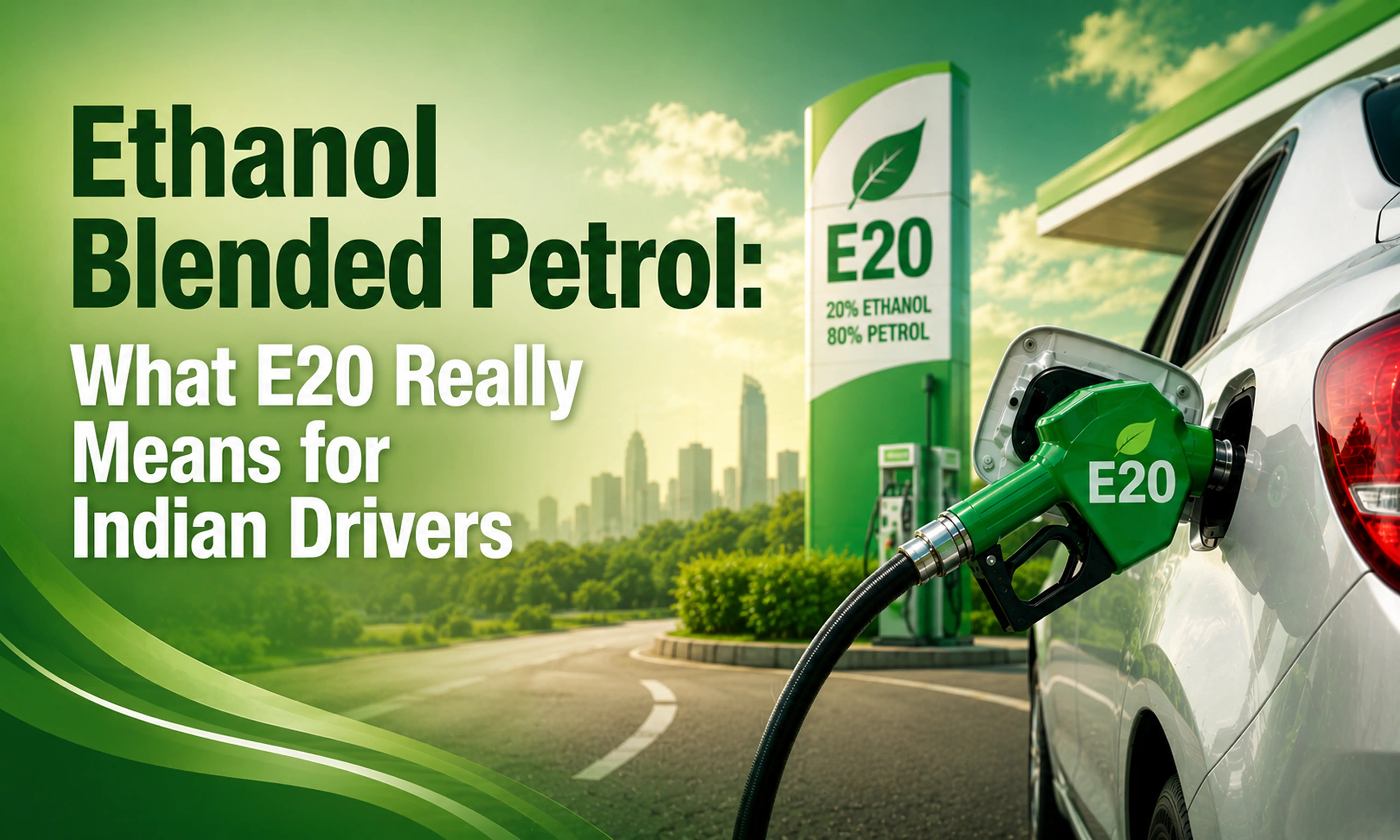
Ethanol blended petrol is no longer a pilot project or a future plan. It is the fuel in your tank right now, and across India it usually means E20, a mix of 20 percent crop-based alcohol and 80 percent petrol. The country reached that level during Ethanol Supply Year 2024 to 2025, well ahead of the original 2030 goal. As the apex distillers' body since 1953, the All India Distillers Association (AIDA) represents the producers who make this possible. Here is what it means for you.
What ethanol blended petrol is?
Ethanol blended petrol is ordinary petrol with dehydrated alcohol mixed in before sale. The label tells you the petrol ethanol content: E10 carries 10 percent alcohol, while E20 carries 20 percent. That petrol ethanol content is the share of every litre that began as a crop rather than crude oil.
Sold simply as ethanol petrol at many outlets, this fuel looks and pumps exactly like the petrol you are used to. The difference sits in the chemistry, not the colour, so ethanol petrol needs no special handling at the forecourt.
The fuel ethanol that goes into the mix
The alcohol mixed into petrol is fuel ethanol, dried until almost no water remains so it stays stable in the tank. Oil companies buy this fuel ethanol from distilleries under fixed contracts, then mix it at depots before distribution.
Because it powers engines, the same product is often called automotive ethanol. Quality rules ensure this automotive ethanol meets a strict purity grade before it ever reaches a vehicle, which protects both the engine and the fuel system.
Renewable and transport ready: why the grade matters
Since it comes from sugarcane, maize and grain, the alcohol in the mix is renewable ethanol. Each crop cycle pulls carbon from the air, which is what gives renewable ethanol its environmental edge over fossil petrol.
To survive long journeys and hot engines, the alcohol must qualify as transport-grade ethanol, clean and dry enough to move and burn reliably. The Bureau of Indian Standards sets the specification for transport-grade ethanol, keeping quality steady from one state to the next.
What ethanol blended petrol means for your vehicle?
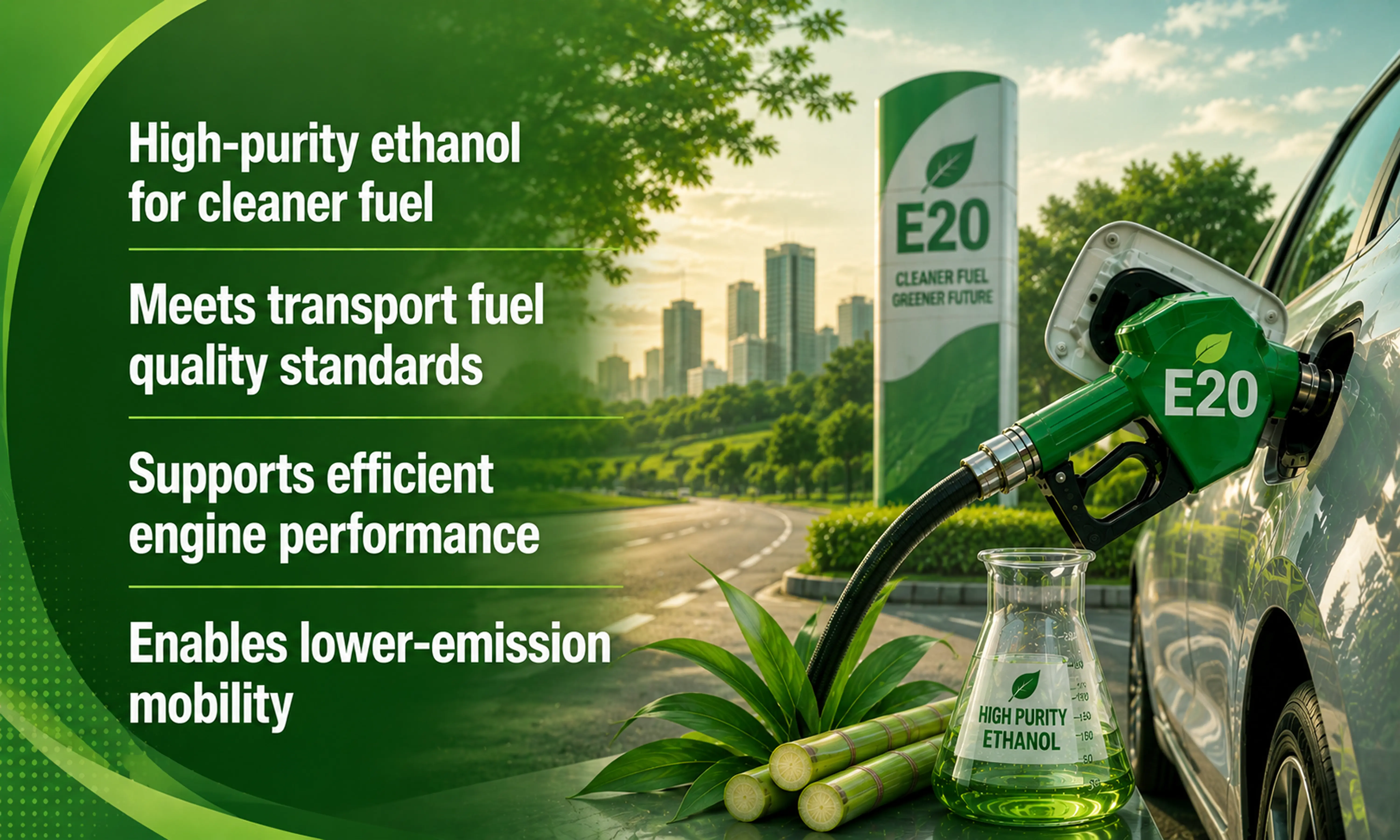
Most vehicles sold in India in recent years are designed to run on ethanol blended petrol up to E20. Carmakers have confirmed both material compatibility and engine tuning, and E20-ready engines have been phased in since 2023.
Older vehicles can still use the fuel, though they may show a small mileage drop. Government-backed studies place that change between roughly one and six percent, depending on the vehicle's age and tuning. For day-to-day driving, the practical impact is modest.
Backed by a national blending program
This fuel did not happen by accident. It grew out of the ethanol blending programme, the government framework that sets targets, fixes prices and obliges oil companies to buy alcohol from distilleries. That programme, anchored by the National Policy on Biofuels, turned scattered pilots into a nationwide rollout.
Thanks to that policy, the country built distillery capacity fast enough to feed E20 demand. The result is ethanol blended petrol that supports farmers, trims oil imports and lowers emissions, all from the pump you already use.
KEY TAKEAWAYS
- Ethanol blended petrol is petrol mixed with crop-based alcohol, with E20 carrying a petrol ethanol content of 20 percent.
- India reached E20 during Ethanol Supply Year 2024 to 2025, ahead of the original 2030 target.
- The alcohol used is renewable, transport-grade fuel ethanol, also called automotive ethanol.
- Most recent vehicles are E20 ready, while older ones may see a one to six percent mileage change.
- The national ethanol blending program built the distillery capacity that made E20 possible.
FREQUENTLY ASKED QUESTIONS
Q1. Is ethanol blended petrol safe for all cars?
Ethanol blended petrol up to E20 is safe for the large majority of vehicles sold in India in recent years, since manufacturers have confirmed compatibility. Older vehicles can still use it, though they may experience a small mileage drop. The petrol ethanol content of E20 is designed to work in standard engines without modification.
Q2. What does the E20 label mean?
The E20 label means the ethanol blended petrol contains 20 percent alcohol and 80 percent petrol by volume. The number after the E always shows the petrol ethanol content. E10 means 10 percent and E20 means 20 percent, which is the grade India now sells widely after reaching the target in 2024 to 2025.
Q3. Does ethanol blended petrol cost less?
It is priced like regular petrol at the pump, so drivers usually pay the standard rate. The bigger savings are national. By replacing imported crude with domestic fuel ethanol, ethanol petrol has saved India more than Rs 1.6 lakh crore in foreign exchange over eleven years, per figures shared in Parliament in December 2025.
Q4. Will ethanol blended petrol damage my engine over time?
At E20 it is not expected to damage engines built for it, which covers most recent Indian vehicles. The automotive ethanol used meets strict purity standards as transport-grade ethanol. Very old vehicles not designed for the fuel may need closer attention, but for modern cars and two-wheelers it is engineered to be safe.
ABOUT AIDA
AIDA, the All India Distillers' Association, has been the voice of Indian distilleries since 1953 and is recognised as the apex national body for ethanol, bioenergy and potable alcohol. Its members hold more than 80 percent of the country's distillation capacity. Read more across the cluster at aidaindia.org.