.webp)
Overview
A decade ago, the idea that a significant portion of India's petrol would come from domestically produced agricultural feedstocks seemed ambitious. Today, it is a reality.
Through the successful implementation of the ethanol blending programme, India achieved approximately 20% ethanol blending during Ethanol Supply Year 2024–25, reaching the milestone years ahead of its original target. This achievement has positioned India among the leading nations adopting biofuels at scale.
The country's progress has been driven by coordinated efforts across the agricultural, energy and distillery sectors. Farmers, ethanol producers, oil marketing companies and policymakers have all contributed to the growth of ethanol blending as a national priority.
As the apex national body representing India's distillery sector since 1953, the All India Distillers Association (AIDA) has closely witnessed the industry's transformation and continues to support initiatives that strengthen ethanol production, supply and adoption across the country.
What is Ethanol Blending?
Ethanol blending is the process of mixing fuel-grade ethanol with petrol before it reaches consumers.
The blended fuel is identified using the letter "E" followed by a number that indicates the percentage of ethanol present.
For example:
- E10 contains 10% ethanol and 90% petrol
- E20 contains 20% ethanol and 80% petrol
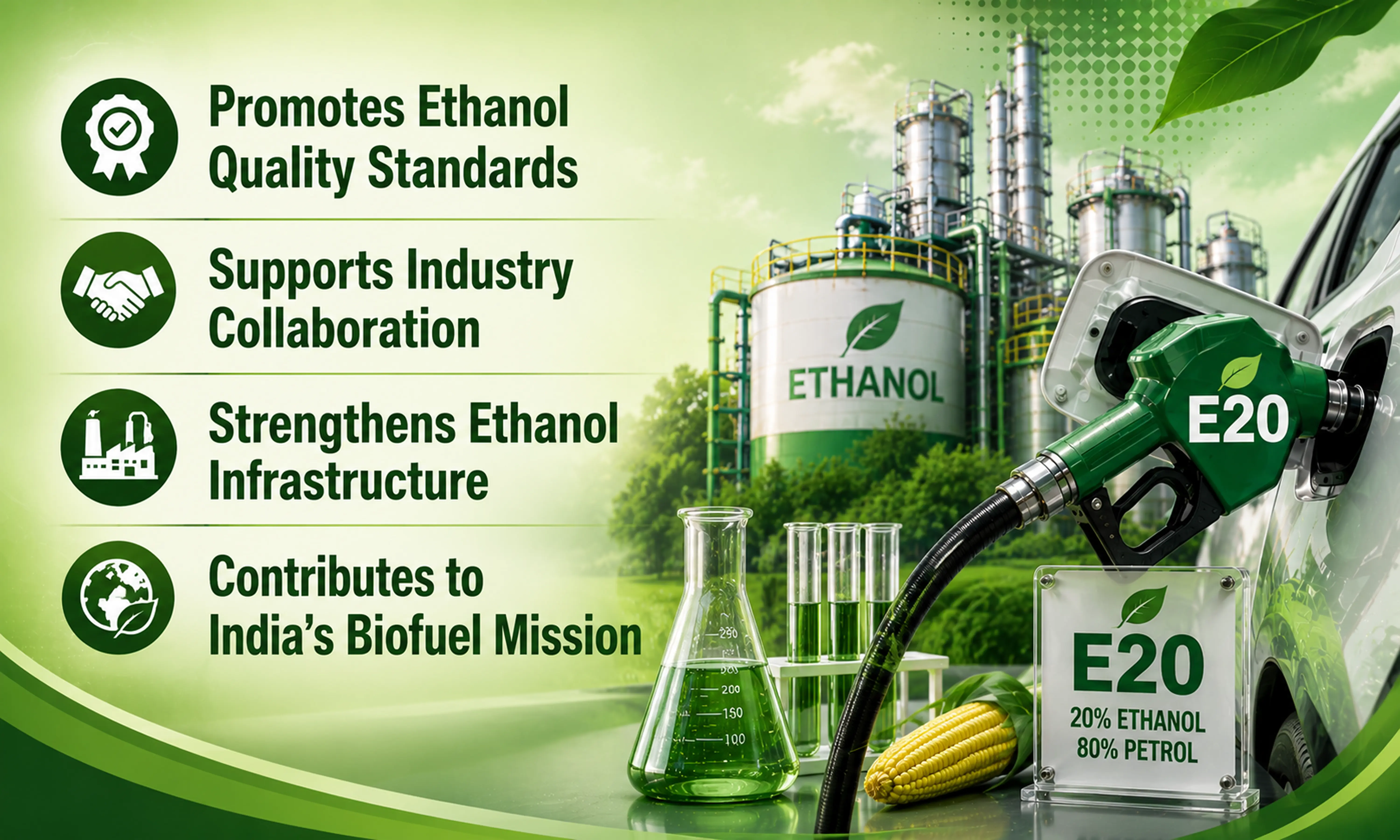
The ethanol used for blending is produced from renewable agricultural feedstocks such as sugarcane, maize, molasses and surplus grains.
Once blended, the fuel can be used in compatible vehicles without requiring any significant change in driving habits.
The objective of ethanol blending is simple: reduce dependence on imported fossil fuels while creating a cleaner and more sustainable fuel ecosystem.
The Evolution of India's Ethanol Blending Programme
India's ethanol blending journey did not happen overnight.
The Ethanol Blended Petrol Programme was initially introduced to promote the use of domestically produced ethanol in transportation fuels. Over time, policy support, infrastructure development and production capacity expansion enabled the programme to grow significantly.
In its early years, blending levels remained relatively modest due to supply constraints and infrastructure limitations.
However, a combination of factors accelerated progress:
- Increased ethanol production capacity
- Expansion of grain-based ethanol production
- Improved procurement mechanisms
- Greater participation from distilleries
- Strong policy support for biofuels
These developments created the foundation for India's rapid transition towards higher blending levels.
For India's distillery industry, the programme also provided long-term visibility and investment confidence, encouraging significant expansion across the sector.
How India Reached E20 Ahead of Schedule?
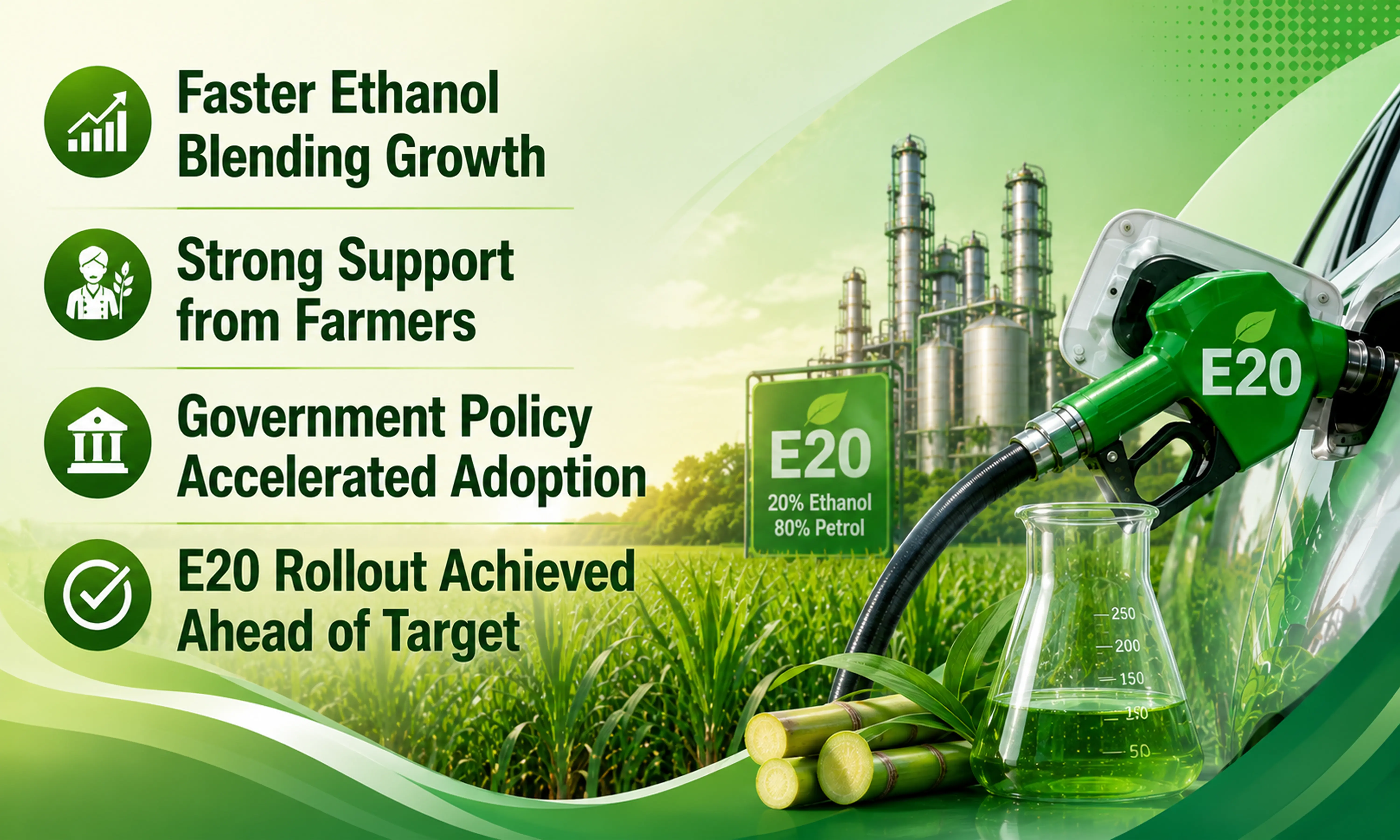
One of the most significant achievements of India's biofuel journey was reaching approximately 20% ethanol blending during Ethanol Supply Year 2024–25.
This milestone was achieved several years ahead of the original target timeline.
The success was driven by:
Expansion of Production Capacity
India's distillery sector significantly increased ethanol production capacity to meet growing demand from oil marketing companies.
New grain-based, molasses-based and dual-feed distilleries helped strengthen supply while improving flexibility across feedstocks.
Diversification of Feedstocks
The industry expanded beyond traditional sugar-based feedstocks.
Maize, surplus rice and other grains increasingly contributed to ethanol production, helping create a more resilient and diversified supply chain.
Industry and Policy Alignment
A collaborative approach between industry stakeholders and government agencies helped address challenges related to production, logistics and procurement.
Through industry representation and policy engagement, organisations such as AIDA have consistently supported efforts aimed at strengthening the ethanol ecosystem and ensuring long-term sustainability.
Benefits of Ethanol Blending for India
The growth of ethanol blending has delivered benefits that extend beyond the fuel sector.
Reduced Crude Oil Dependence
India imports a significant portion of its crude oil requirements.
By replacing a share of petrol with domestically produced ethanol, the country can reduce dependence on imported fuels while improving energy security.
Support for Agriculture
Ethanol production creates additional demand for agricultural feedstocks including sugarcane, maize and grains.
This creates new market opportunities for farmers and contributes to rural economic development.
Environmental Benefits
Because ethanol is produced from renewable feedstocks, it contributes to lower lifecycle emissions compared to conventional fossil fuels.
As blending levels increase, ethanol continues to play an important role in supporting cleaner mobility solutions.
Growth of the Distillery Sector
The expansion of ethanol blending has encouraged investment in new production facilities, technology upgrades and infrastructure development.
This growth has strengthened India's position as a leading ethanol-producing nation.
AIDA's Role in India's Ethanol Journey
As India's ethanol sector evolved, industry coordination became increasingly important.
Representing members that account for more than 80% of India's distillation capacity, AIDA has consistently supported the growth of ethanol production and blending across the country.
Over the years, AIDA has engaged with industry stakeholders and policymakers on issues related to:
- Ethanol production capacity
- Feedstock availability
- Biofuel policy
- Ethanol blending targets
- Flex-fuel technologies
- Long-term ethanol development
The association has also contributed to discussions around future blending pathways, ensuring that industry perspectives remain part of the conversation as India continues expanding its ethanol ambitions.
What Comes After E20?
Achieving E20 represents a major milestone, but it is not the final destination.
Industry discussions are increasingly focused on:
- Higher ethanol blends
- Flex-fuel vehicles
- E22 and E25 standards
- E30 possibilities
- Future ethanol-based mobility solutions
Recent developments in vehicle certification and flex-fuel technologies suggest that ethanol's role in India's transportation sector may continue to expand in the coming years.
As these discussions evolve, the ethanol industry will play a critical role in supporting the country's long-term energy and sustainability goals.
For AIDA and its members, the focus remains on building a strong, reliable and future-ready ethanol ecosystem that supports both economic growth and energy security.
Key Takeaways
- Ethanol blending involves mixing fuel-grade ethanol with petrol before distribution.
- India achieved approximately 20% ethanol blending during Ethanol Supply Year 2024–25.
- The success of E20 was supported by increased production capacity, diversified feedstocks and policy support.
- Ethanol blending helps reduce crude oil imports and strengthen energy security.
- The programme supports agricultural value chains and rural economies.
- AIDA represents more than 80% of India's distillation capacity and continues to support the growth of India's ethanol ecosystem.
- Future discussions include higher ethanol blends, flex-fuel vehicles and expanded biofuel adoption.
Frequently Asked Questions
What is ethanol blending?
Ethanol blending is the process of mixing fuel-grade ethanol with petrol. The resulting fuel is identified by labels such as E10 or E20, which indicate the percentage of ethanol present.
When did India achieve E20?
India achieved approximately 20% ethanol blending during Ethanol Supply Year 2024–25, reaching the milestone ahead of the original target timeline.
Why is ethanol blending important?
Ethanol blending helps reduce crude oil imports, strengthens energy security, supports agricultural feedstocks and contributes to cleaner fuel solutions.
What comes after E20?
Industry discussions are currently exploring higher ethanol blends, flex-fuel vehicles and future pathways such as E22, E25 and E30 fuel standards.
About AIDA
The All India Distillers' Association (AIDA) is the apex national body representing India's distillery sector. Established in 1953, AIDA represents members accounting for more than 80% of the country's distillation capacity and actively supports the growth of ethanol, bioenergy and sustainable fuel initiatives in India through industry representation, policy engagement and knowledge leadership.