
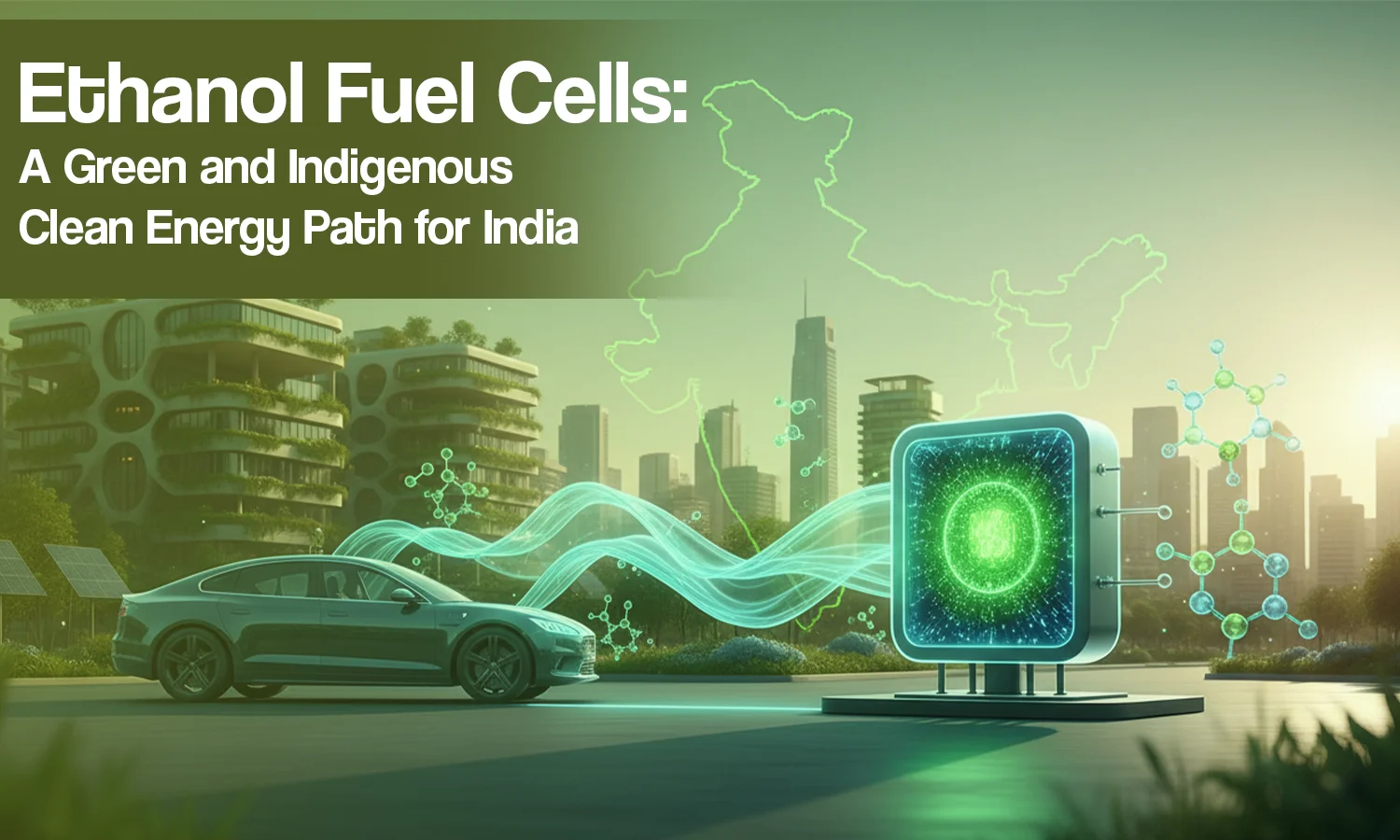
India’s ethanol industry reached a critical milestone in February 2026. We now have a production capacity of 2,000 crore litres, yet the current blending mandates only require about half of that volume. The All India Distillers’ Association (AIDA) is now looking at the Direct Ethanol Fuel Cell (DEFC) as the primary strategic outlet for this massive surplus. This technology offers a way to turn ethanol into electricity without the noise or emissions of traditional combustion.
What is an Ethanol Fuel Cell?
A fuel cell is an electrochemical device that converts chemical energy directly into electrical power. It facilitates a reaction between ethanol and oxygen to produce a steady flow of electricity.
Standard generators burn fuel to create mechanical motion. A DEFC bypasses this process entirely. There are no moving pistons and no fire, which results in a silent, high-efficiency power source. The only byproducts are water and a small amount of heat.
Why Ethanol is Considered a Green and Indigenous Energy Source
India spends billions on importing crude oil and the materials required for high-end batteries. Ethanol fuel cells provide a 100% indigenous alternative.
♦ Energy Sovereignty: Ethanol is produced in Indian distilleries from local crops like maize and broken rice.
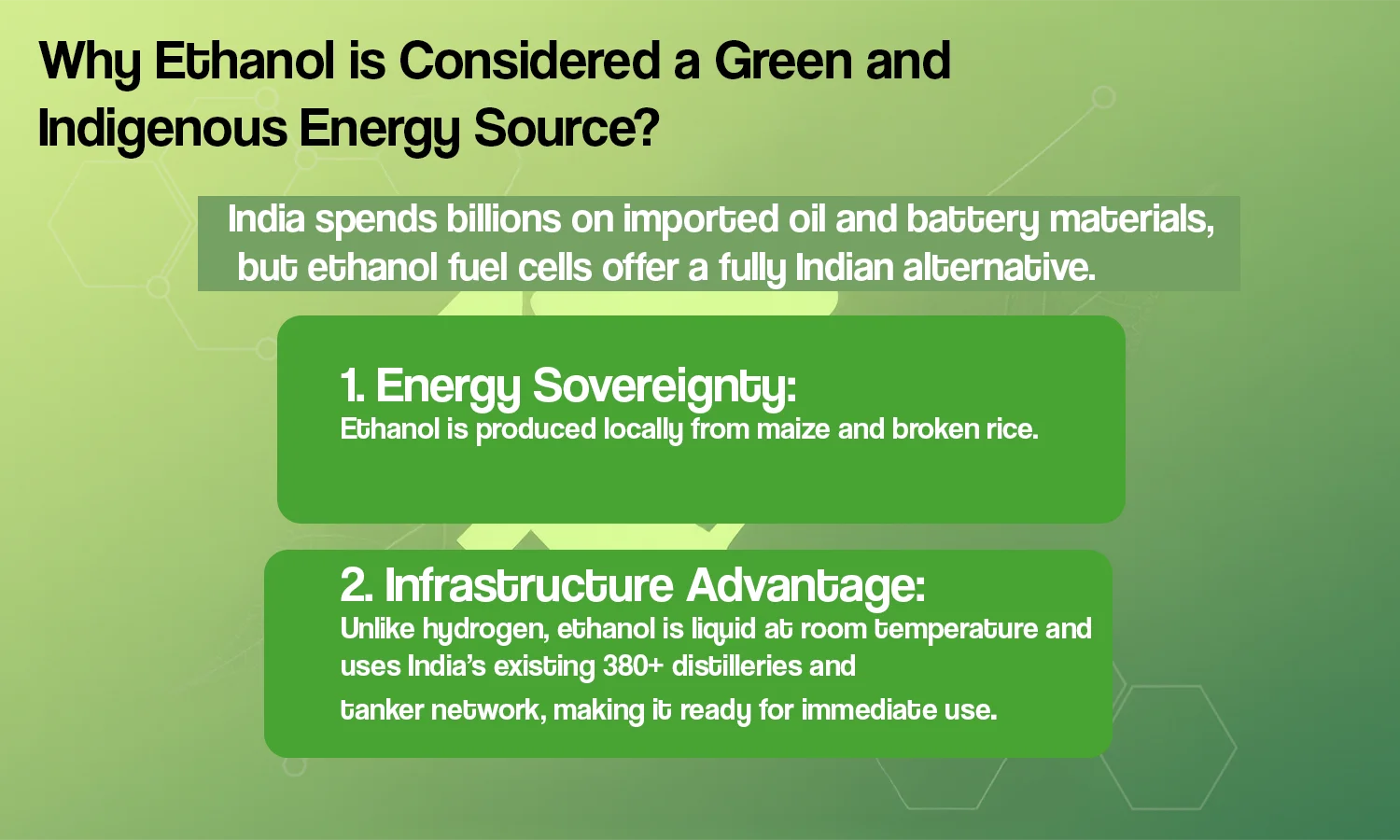
♦ Infrastructure Advantage: Hydrogen fuel cells require expensive, high-pressure pipelines that do not yet exist. Ethanol is liquid at room temperature and uses the existing 380+ AIDA distilleries and tanker networks for distribution. It is essentially "Liquid Hydrogen" that is ready for immediate use.
Different Types of Direct Ethanol Fuel Cells
The industry is currently focusing on two specific architectures for the Indian market:
♦ Proton Exchange Membrane (PEM-DEFC): These are compact and operate at lower temperatures. They are best suited for portable power and smaller backup systems.
♦ Alkaline DEFCs (A-DEFC): These are gaining traction because they can function with non-precious metal catalysts like nickel. This significantly reduces the manufacturing cost compared to cells that require platinum.
Key Aspects of Ethanol as a Clean Energy Pathway in India
The stationary power sector is the most immediate opportunity for this technology.
♦ Replacing Diesel Generators: Millions of diesel gensets in Indian hospitals, data centers, and telecom towers contribute heavily to urban smog. Replacing them with ethanol fuel cells would eliminate particulate matter and soot entirely.

♦ Rural Electrification: As AIDA pushes for the use of 2G ethanol (from agricultural waste), fuel cells can provide "firm" power to rural micro-grids. This allows villages to generate their own electricity from their own crop residues.
Challenges and Limitations in India
Scaling this technology from the lab to the market requires addressing a few technical hurdles:
♦ Catalyst Durability: Ethanol molecules are more complex to break down than hydrogen. We need more research into durable catalysts that can handle long-term operation.
♦ Policy Support: Current government incentives favor Electric Vehicles (EVs). AIDA is advocating for the inclusion of ethanol fuel cells in future phases of the National Green Hydrogen Mission to level the playing field.
FAQ
Do ethanol fuel cells produce emissions?
They produce zero particulate matter and sulfur oxides. The carbon dioxide released is "biogenic," meaning it was recently absorbed by the crops during growth. This makes the cycle essentially carbon-neutral.
Are ethanol fuel cells currently used in India?
The technology is in the pilot and demonstration phase. In early 2026, several trials are underway to test these cells as zero-emission backups in "Green Zones" and sensitive urban areas.
Why is ethanol fuel cell technology relevant for India?
It provides a vital second market for India's 1,000 crore litre ethanol surplus. By moving into stationary power, we protect the investments of AIDA members and ensure a stable demand for the crops grown by Indian farmers.