
.webp)
Overview
An ethanol plant is where a field of sugarcane or a silo of maize becomes the alcohol in your petrol. India built dozens of these distilleries in recent years to feed its E20 target, lifting capacity to about 1,822 crore litres a year across 499 sites by mid 2025. As the apex distillers' body since 1953, the All India Distillers Association (AIDA) represents the companies running them. Here is how one works and why so many appeared so fast.
What happens inside an ethanol plant?
An ethanol plant does three jobs in sequence: it prepares the feedstock, ferments the sugars and distils the alcohol. Yeast converts sugar into raw alcohol, then distillation columns concentrate it, and a final drying step removes the last of the water.
A modern ethanol production plant is built to run on more than one raw material. That flexibility lets the ethanol production plant switch between sugarcane juice, molasses, maize and surplus rice depending on price and availability, which keeps it busy year round.
Ethanol production: from feedstock to fuel
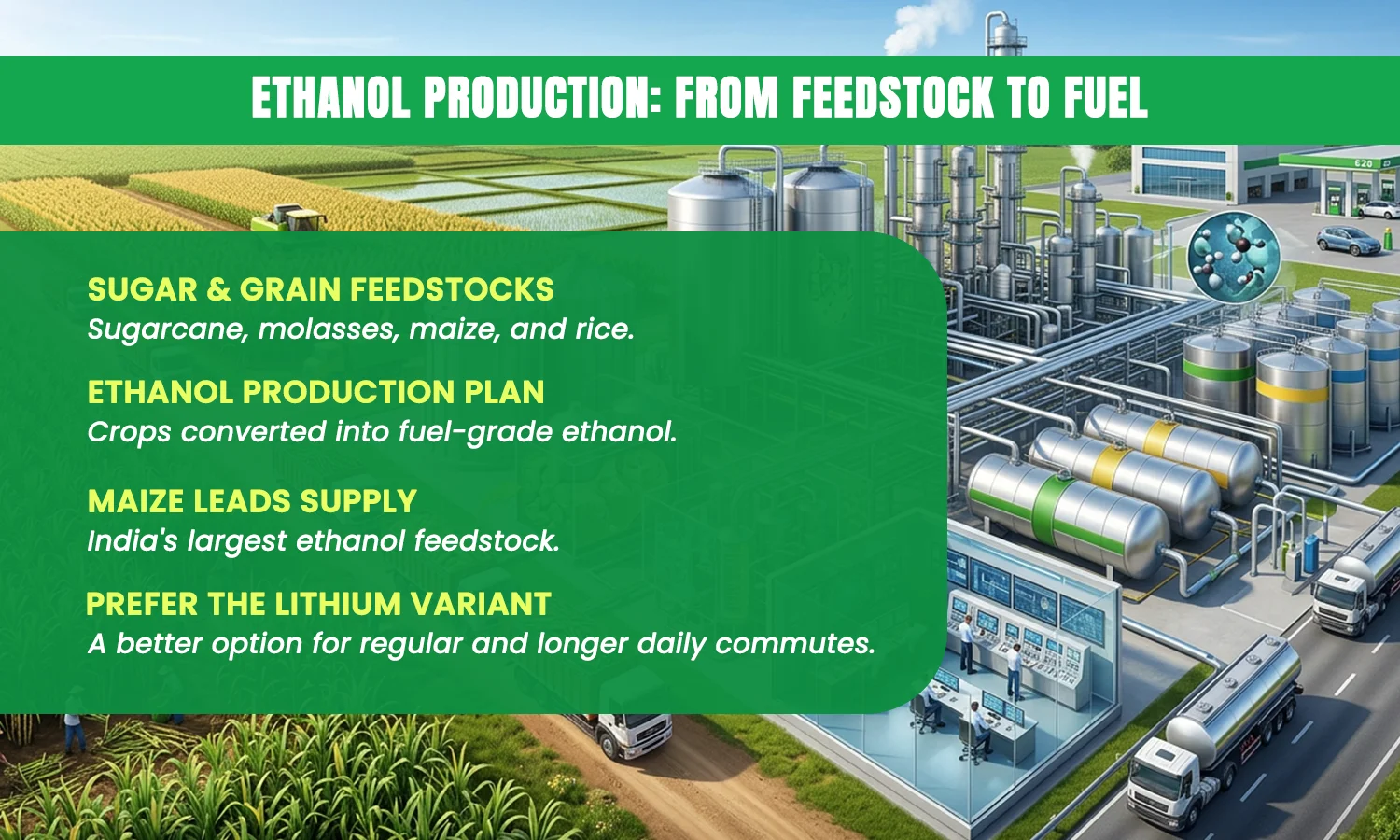
The heart of the business is ethanol production, turning crops and biomass into fuel-grade alcohol. Sugar-based ethanol production uses cane juice and molasses, while grain-based sites use maize and rice. Maize has grown into the largest single source, supplying close to half of supply in Ethanol Supply Year 2024 to 2025.
Across the country, ethanol production in india now spans both routes, with grain-based output overtaking the sugar route. This shift in ethanol production in india matters because it loosens the link between fuel and the sugar cycle, giving the system more stability.
Who runs India's ethanol plants?
The ethanol production companies in india range from sugar majors to grain distillers and even state-owned refiners. Shree Renuka Sugars, Balrampur Chini Mills, Triveni Engineering, Globus Spirits and India Glycols all operate at scale, and Praj Industries supplies much of the plant technology.
Public sector oil companies have joined the ranks of ethanol production companies in india by building second-generation sites that run on crop residue. This mix of private and public players keeps capacity growing and supply diverse.
Ethanol supply and distribution to the pumps
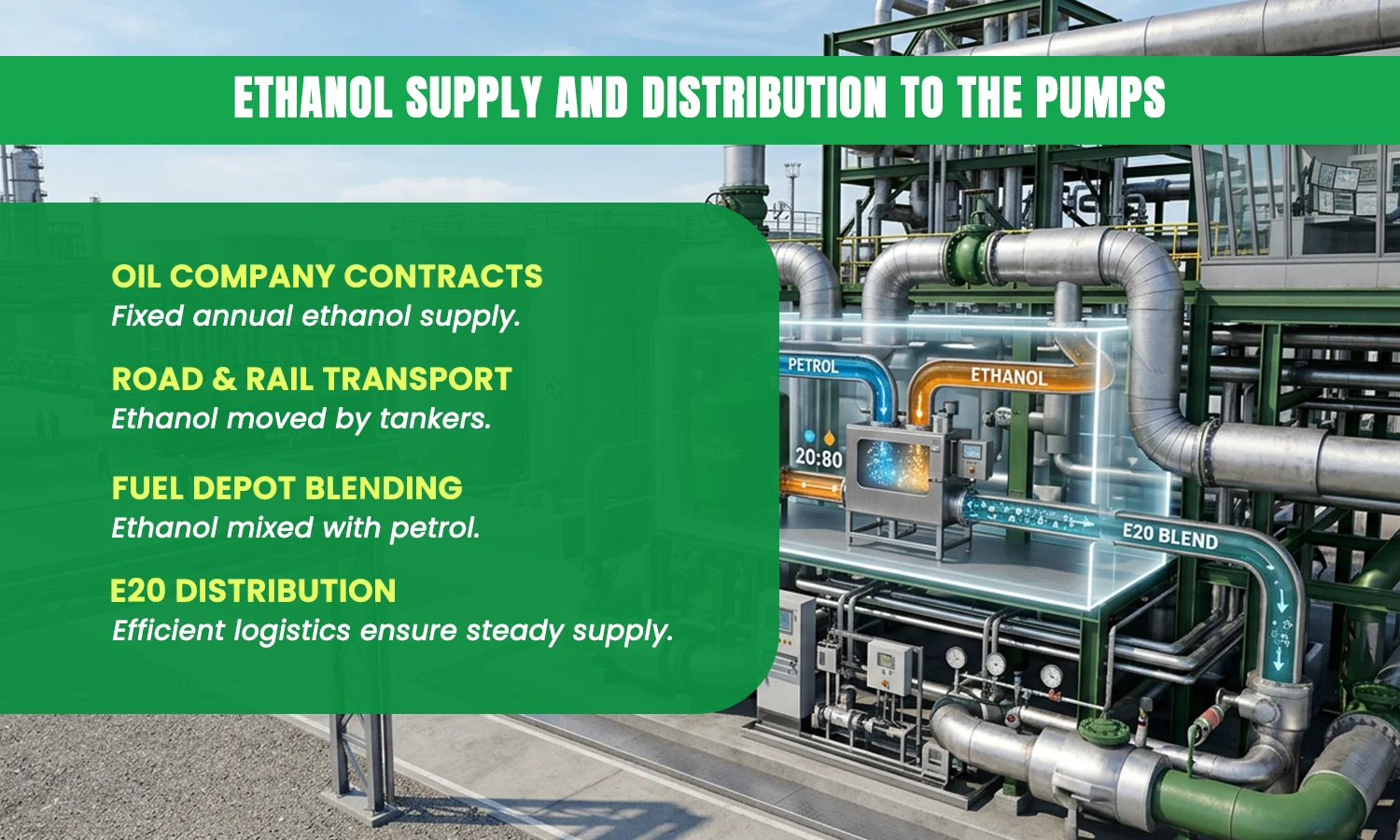
Once made, the alcohol enters ethanol supply contracts with the public oil companies, which buy fixed quantities each year at administered prices. Reliable ethanol supply is what lets refiners hit their targets without running short.
Onward ethanol distribution moves the alcohol by road and rail tankers from the ethanol plant to oil company depots, where it is mixed into petrol. Smooth ethanol distribution across long distances is the quiet logistics challenge behind every litre of E20.
How government subsidy fuelled the build-out?
Much of this growth traces back to a clear government subsidy for ethanol production in india. Under an interest subvention scheme, the government covers part of the interest on bank loans taken to build or expand a distillery, easing the cost of new capacity.
The government subsidy for ethanol production in india typically covers 6 percent of the interest, or half the bank rate, for five years including a one-year moratorium, provided the site meets pollution norms and supplies most of its output to oil companies. That support is a key reason capacity expanded so quickly.
E20 is only the beginning. What’s powering India’s ethanol growth? Explore the latest industry insights with the All India Distillers’ Association.
KEY TAKEAWAYS
- An ethanol plant prepares feedstock, ferments the sugars and distils the alcohol into fuel-grade ethanol.
- India reached about 1,822 crore litres of capacity across 499 distilleries by mid 2025, with maize the leading feedstock.
- Ethanol production in India now spans sugar-based and grain-based routes, with grain output overtaking sugar.
- Major producers include Shree Renuka Sugars, Balrampur Chini, Triveni, Globus Spirits and India Glycols, plus state-owned 2G sites.
- A government interest subvention covering about 6 percent of loan interest helped fund the rapid build-out.
FREQUENTLY ASKED QUESTIONS
Q1. How does an ethanol plant make fuel from crops?
An ethanol plant prepares the feedstock, ferments its sugars using yeast, then distils and dries the alcohol. Sugar-based sites use cane juice and molasses, while grain-based ones use maize and rice. The final product is anhydrous ethanol pure enough to mix into petrol. A modern ethanol production plant can run on several feedstocks.
Q2. How much ethanol can India's plants produce?
India's installed capacity reached about 1,822 crore litres a year across 499 distilleries by mid 2025, according to the Department of Food and Public Distribution. This ethanol production capacity, split between molasses-based, grain-based and dual-feed sites, is what allowed the country to reach 20 percent blending.
Q3. Is there a government subsidy for building an ethanol plant?
Yes, there is a government subsidy for ethanol production in India through an interest subvention scheme. The government covers about 6 percent of the loan interest, or half the bank rate, for five years including a one-year moratorium. The site must meet pollution norms and supply most of its output to oil companies.
Q4. Who handles ethanol supply and distribution in India?
Ethanol supply runs through contracts between distilleries and the public oil companies, which buy fixed quantities each year. Ethanol distribution then moves the alcohol by road and rail tankers from each ethanol plant to oil company depots, where it is mixed into petrol before reaching retail outlets across the country.
ABOUT AIDA
AIDA, the All India Distillers' Association, has been the voice of Indian distilleries since 1953 and is recognised as the apex national body for ethanol, bioenergy and potable alcohol. Its members hold more than 80 percent of the country's distillation capacity. Read more across the cluster at aidaindia.org.