
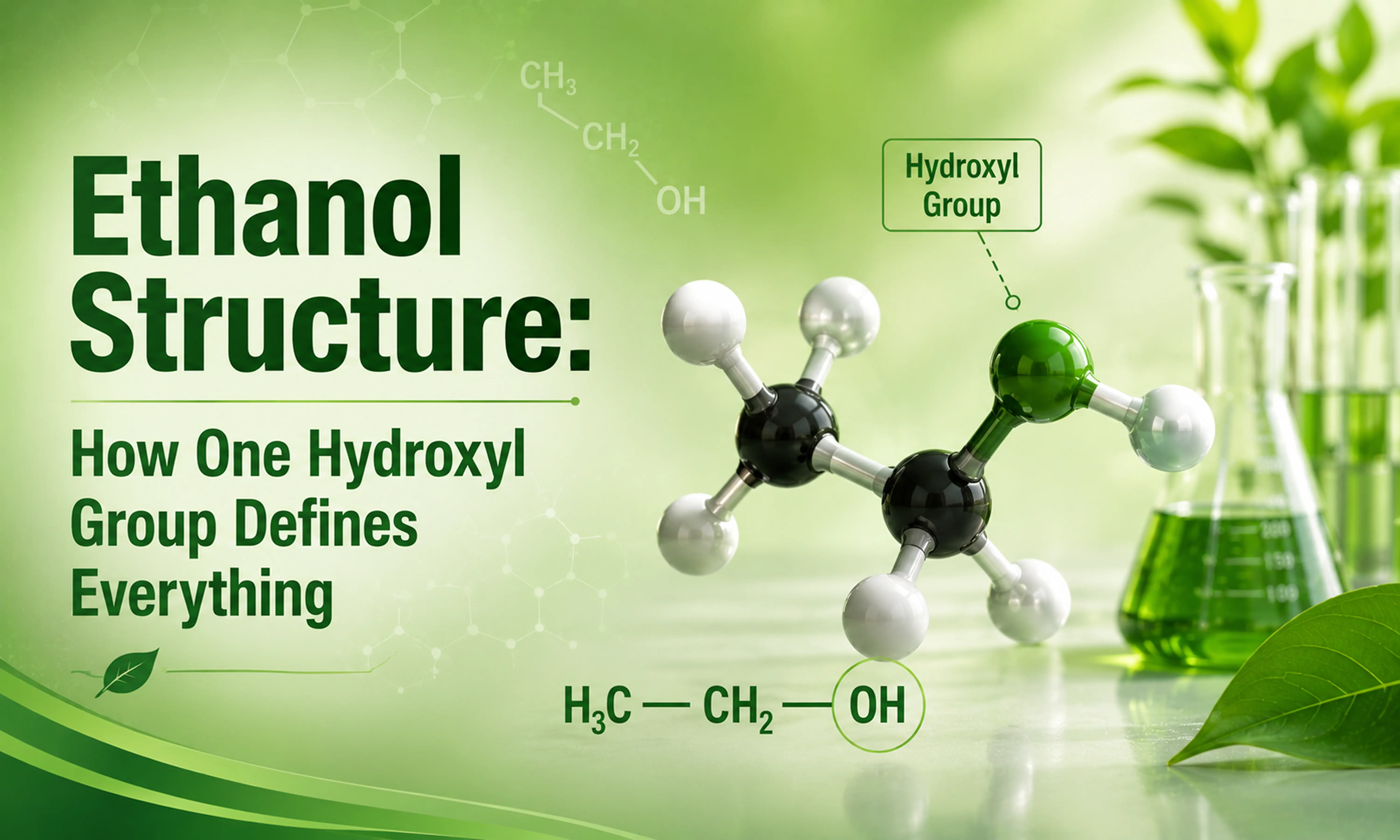
Overview
The ethanol structure looks almost too simple to matter, yet that small arrangement of atoms decides how the molecule burns, mixes and reacts. Two carbons, a string of hydrogens and one oxygen do a remarkable amount of work. Understand the shape and you understand why this alcohol fuels cars and cleans wounds alike. As India's apex distillers' body since 1953, the All India Distillers Association (AIDA) works with the molecule daily, so here is the structure explained without the jargon.
Drawing the ethanol structure step by step
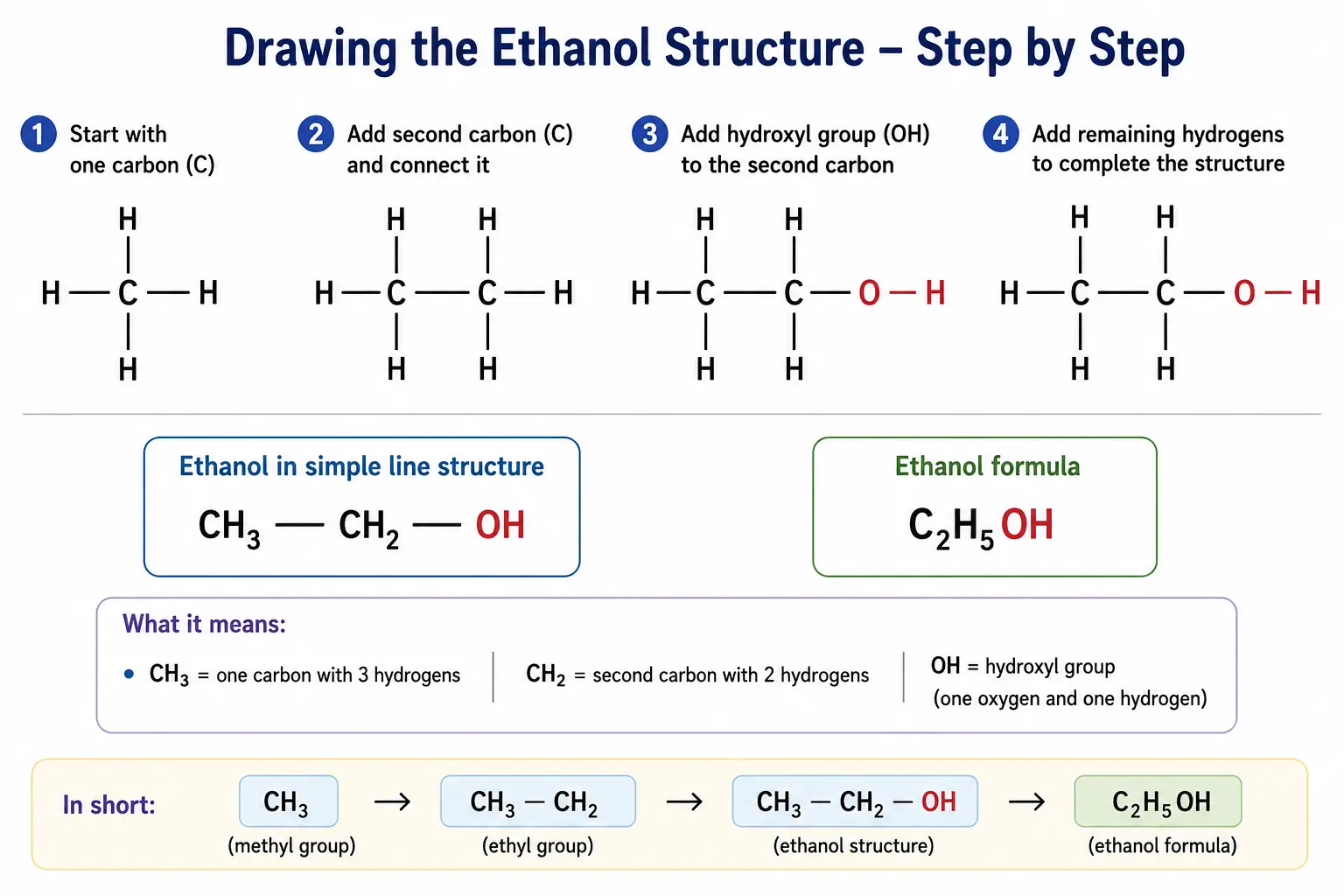
Picture a chain: a CH3 group, joined to a CH2 group, joined to an OH group. That is the ethanol structure in a single line, CH3-CH2-OH. The matching ethanol formula is C2H5OH, which counts the same atoms a different way.
The first two carbons form an ethyl group, the petrol-like part of the molecule. The OH on the end is a hydroxyl group, the water-loving part. So the shape is really two characters in one molecule, and the ethanol formula captures both ends at once.
What is ethanol once you see its structure?
With the shape in front of you, the question what is ethanol answers itself. It is an alcohol, defined by that hydroxyl group sitting on a short carbon chain. Take away the OH and you have ethane, a gas. Add it and you have a liquid that mixes with water.
This is why what is ethanol and what its shape means are linked. The hydroxyl group lets the molecule form hydrogen bonds, which raises its boiling point to about 78 degrees Celsius and lets it dissolve in water. The ethanol structure is the reason behind every one of these everyday traits.
How structure shapes the uses of ethanol?
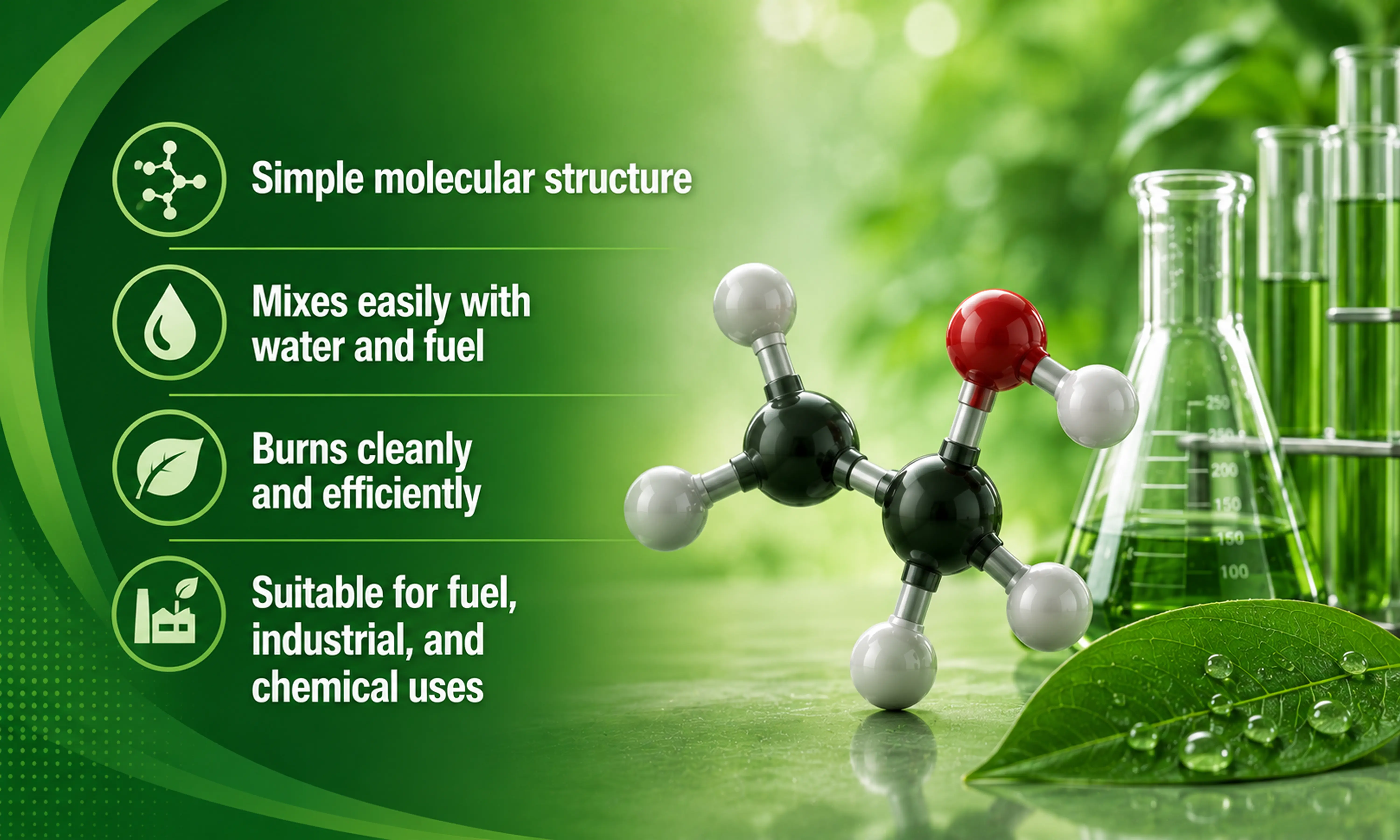
The uses of ethanol flow directly from its shape. The carbon end mixes with fuel and oils, while the hydroxyl end mixes with water, so the molecule bridges the two. That is why it works as a solvent in paints, perfumes and medicines.
The same dual nature explains the uses of ethanol in sanitiser and fuel. It dissolves the oily coats of germs and it burns cleanly in an engine. None of these roles would exist without the precise ethanol structure that puts a water-loving group on a fuel-like backbone.
Same structure, different grades: anhydrous and denatured
The arrangement never changes, but the grade does. Anhydrous ethanol is the molecule with nearly all its water removed, 99.5 percent pure or better, which fuel blending requires. The shape is identical, only the surrounding water is gone.
Denatured ethanol keeps the very same ethanol structure but adds bittering or toxic agents so it cannot be drunk. Factories use denatured ethanol and fuel depots use anhydrous ethanol, yet a chemist looking at the molecule sees no change. The shape stays constant while the label shifts.
Why the structure makes ethanol renewable and road ready?
Because plants build that simple shape during fermentation, the alcohol counts as renewable ethanol rather than a fossil product. Yeast assembles the molecule from sugar, and the same molecule can be grown again next season, which is what makes renewable ethanol sustainable.
When that molecule is dried for engines, it becomes automotive ethanol, ready to mix into petrol. The structure that allows clean burning is exactly what makes automotive ethanol a workable fuel. One small arrangement of atoms, many large consequences.
KEY TAKEAWAYS
- The ethanol structure is CH3-CH2-OH, an ethyl group joined to a hydroxyl group, matching the formula C2H5OH.
- The hydroxyl (OH) group lets it form hydrogen bonds, mix with water and burn cleanly.
- Its dual nature, fuel-like at one end and water-loving at the other, drives every major use of ethanol.
- Anhydrous and denatured grades share the same structure, differing only in water content and additives.
- Plants build this arrangement during fermentation, which is why crop ethanol is renewable.
FREQUENTLY ASKED QUESTIONS
Q1. What is the ethanol structure in simple terms?
The ethanol structure is a short carbon chain written as CH3-CH2-OH. Two carbons form an ethyl group and an oxygen-hydrogen pair forms a hydroxyl group on the end. This matches the ethanol formula C2H5OH and is what classifies the compound as an alcohol rather than a simple hydrocarbon.
Q2. How does the ethanol structure affect its properties?
It gives the molecule a water-loving hydroxyl end and a fuel-like carbon end. That hydroxyl group forms hydrogen bonds, which raise the boiling point to about 78 degrees Celsius and let it mix freely with water. The same ethanol structure lets it dissolve oily substances and burn cleanly in engines.
Q3. Does anhydrous ethanol have a different structure?
No, anhydrous ethanol has the same arrangement, CH3-CH2-OH. The term anhydrous only means the water content has been reduced to about 0.5 percent or less. This purity is needed for petrol blending, but the molecule itself is unchanged, so its chemical behaviour stays the same.
Q4. Why does the ethanol structure make it a good fuel?
The ethanol structure places oxygen inside the molecule, which helps it burn more completely than plain petrol. The carbon chain provides energy while the hydroxyl group supports clean combustion. This balance is why the alcohol works well as automotive ethanol when mixed into petrol for everyday vehicles.
ABOUT AIDA
AIDA, the All India Distillers' Association, has been the voice of Indian distilleries since 1953 and is recognised as the apex national body for ethanol, bioenergy and potable alcohol. Its members hold more than 80 percent of the country's distillation capacity. Read more across the cluster at aidaindia.org.