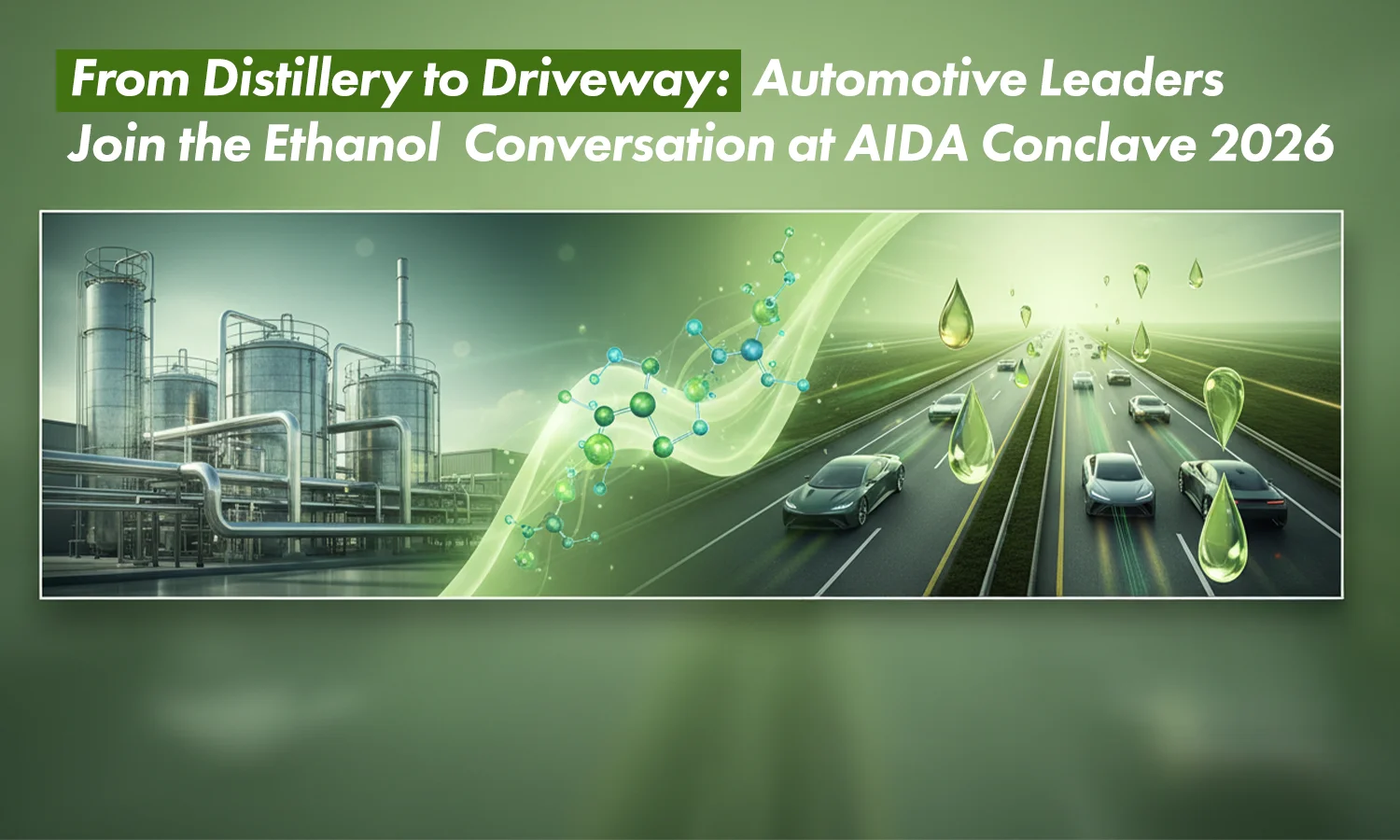
India’s ethanol program is transforming the country’s fuel landscape. As ethanol blending in India continues to expand, the success of this transition depends not only on distilleries producing fuel but also on vehicles that can efficiently use it.
The AIDA Annual Distillers’ Conclave 2026, taking place on 24 March at The Grand, New Delhi, brings together leaders from across the ethanol ecosystem to address this challenge. One of the most significant aspects of the event is the participation of experts from the automotive sector, who play a crucial role in enabling ethanol-based mobility.
By connecting distillery operators with vehicle manufacturers and research institutions, the conclave creates a space where fuel production and vehicle technology can evolve together.
Understanding the Role of Flex Fuel Vehicles
A key development in India’s energy transition is the growing focus on flex fuel vehicles. Unlike traditional engines designed for a fixed petrol composition, flex fuel vehicles can run on different blends of ethanol-blended petrol, including higher ethanol concentrations.
This technology allows the fuel system to adapt automatically depending on the petrol ethanol content available at the pump.
The shift toward flex fuel in India is expected to accelerate the use of renewable ethanol while reducing dependence on imported fossil fuels. For the distillery industry, this development creates a stable and expanding market for ethanol fuel.
At the conclave, these developments will be examined through discussions between automotive engineers and ethanol producers.
Automotive Industry Perspectives
The automotive sector’s participation at the AIDA Conclave highlights the growing link between vehicle design and ethanol blending strategies.
Mr. Tarun Aggarwal, Senior Executive Officer (Engineering) at Maruti Suzuki India Ltd., will share insights on how the automotive industry is preparing for higher ethanol blends and flex fuel technology.
As one of the largest automobile manufacturers in India, Maruti Suzuki plays a significant role in shaping how flex fuel vehicles enter the mainstream market.
Understanding how engines respond to higher ethanol blends is essential for ensuring reliable performance, fuel efficiency, and long-term durability.
These insights provide distillery operators with a clearer understanding of how the automotive industry views the future of ethanol fuel.
The Role of Automotive Research
In addition to manufacturers, automotive research institutions are central to developing fuel standards and testing vehicle performance.
The conclave will also feature Dr. Reji Mathai, Director of the Automotive Research Association of India (ARAI).
With decades of experience in automotive research and fuel evaluation, Dr. Mathai has played a key role in advancing the development of ethanol-blended petrol and sustainable mobility solutions.
His perspective helps bridge the gap between fuel producers and automotive engineers, ensuring that ethanol blending strategies align with real-world vehicle performance and regulatory standards.
Building the Ethanol Mobility Ecosystem
The collaboration between distilleries and automotive leaders represents an important step toward a complete ethanol mobility ecosystem.
Fuel producers must ensure a stable ethanol supply and quality standards, while vehicle manufacturers must design engines capable of handling higher ethanol blends.
At the same time, policymakers and regulators continue to shape the broader framework for ethanol blending in India.
The AIDA Conclave brings these stakeholders together under one roof, allowing them to address technical challenges, market expectations, and policy frameworks simultaneously.
Key Takeaways
♦ Flex fuel vehicles are becoming an important part of India’s energy transition strategy.
♦ Ethanol-blended petrol requires coordination between distilleries and automotive manufacturers.
♦ Automotive leaders and ethanol producers will discuss fuel compatibility and vehicle performance.
♦ Research institutions help ensure fuel standards and vehicle testing align with ethanol blending goals.
♦ The AIDA Conclave 2026 connects the entire ethanol mobility ecosystem.
Conclusion
India’s transition toward ethanol-based mobility depends on collaboration across multiple industries. Distilleries, vehicle manufacturers, research institutions, and policymakers must work together to ensure that both fuel supply and vehicle technology evolve in parallel.
The AIDA Annual Distillers’ Conclave 2026 offers a platform where these conversations can take place directly. By bringing automotive leaders and ethanol producers into the same room, the event highlights how the future of fuel and mobility is being built collaboratively.
For those involved in the ethanol ecosystem, these discussions offer valuable insights into how flex fuel technology and renewable ethanol will shape the next phase of India’s transportation sector.
FAQs
What are flex-fuel vehicles?
Flex fuel vehicles are designed to run on different mixtures of petrol and ethanol. These engines automatically adjust to varying petrol-ethanol content without affecting performance.
Why are automotive companies participating in the AIDA Conclave?
Automotive manufacturers play a major role in enabling ethanol blending strategies. Their participation helps ensure that vehicle technology evolves alongside ethanol fuel production.
How does ethanol-blended petrol support India’s energy transition?
Ethanol-blended petrol reduces reliance on imported fossil fuels while supporting domestic agriculture and renewable energy goals. Increasing ethanol blending in India is a key part of the country’s long-term energy strategy.