
Overview
Every time you fill up your vehicle in India, a portion of that fuel likely comes from crops grown by Indian farmers. Through the country's expanding ethanol blending programme, fuel ethanol has become an integral part of India's transportation and energy landscape.
What was once viewed primarily as an industrial and potable alcohol product is now helping reduce dependence on imported crude oil, strengthen energy security and support agricultural value chains across the country.
India's achievement of approximately 20% ethanol blending during Ethanol Supply Year 2024–25 marked a significant milestone in this journey. Behind this progress stands a growing ecosystem of distilleries, farmers, oil marketing companies and policymakers working together to expand ethanol adoption.
As the apex national body representing India's distillery sector since 1953, the All India Distillers Association (AIDA) has witnessed the transformation of fuel ethanol from a niche product into one of the most important components of India's clean energy transition.
What is Fuel Ethanol?
Fuel ethanol is a renewable alcohol produced from agricultural feedstocks such as sugarcane, maize, molasses and surplus grains. Chemically, it is the same molecule represented by the formula C₂H₅OH.
The difference lies in how it is processed and used.
Unlike beverage alcohol, fuel ethanol is produced and prepared specifically for transportation and energy applications. Before it can be blended with petrol, it undergoes additional purification to remove excess water and ensure compatibility with vehicle engines.
Because it is used in transportation, fuel ethanol is also commonly referred to as:
- Automotive ethanol
- Ethanol fuel
- Transport-grade ethanol
Regardless of the name, the objective remains the same: providing a cleaner, domestically produced alternative to fossil fuel consumption.
How Fuel Ethanol is Produced?
The production of fuel ethanol begins with agricultural feedstocks.
Sugars and starches present in crops are converted into alcohol through fermentation. The resulting alcohol is then distilled and purified to create ethanol suitable for fuel applications.
India's ethanol industry today relies on multiple feedstocks including:
- Sugarcane juice
- B-heavy molasses
- C-heavy molasses
- Maize
- Surplus rice and grains
This diversified feedstock approach has helped strengthen supply while supporting both agricultural and industrial growth.
Why Fuel Ethanol is Considered Renewable?
One of the biggest advantages of fuel ethanol is that it is a renewable source of energy.
Unlike petroleum products, which take millions of years to form, ethanol is produced from crops that can be cultivated and harvested every season.
Plants absorb carbon dioxide during growth. When ethanol is produced and used as fuel, part of the emissions released during combustion are offset by the carbon absorbed during cultivation.
This renewable cycle is one of the reasons governments across the world have embraced ethanol blending as part of their energy and environmental strategies.
For India, the benefits extend beyond emissions. Increased use of fuel ethanol also creates additional demand for agricultural produce, supporting rural economies and farm incomes.
Understanding Ethanol Blending in India
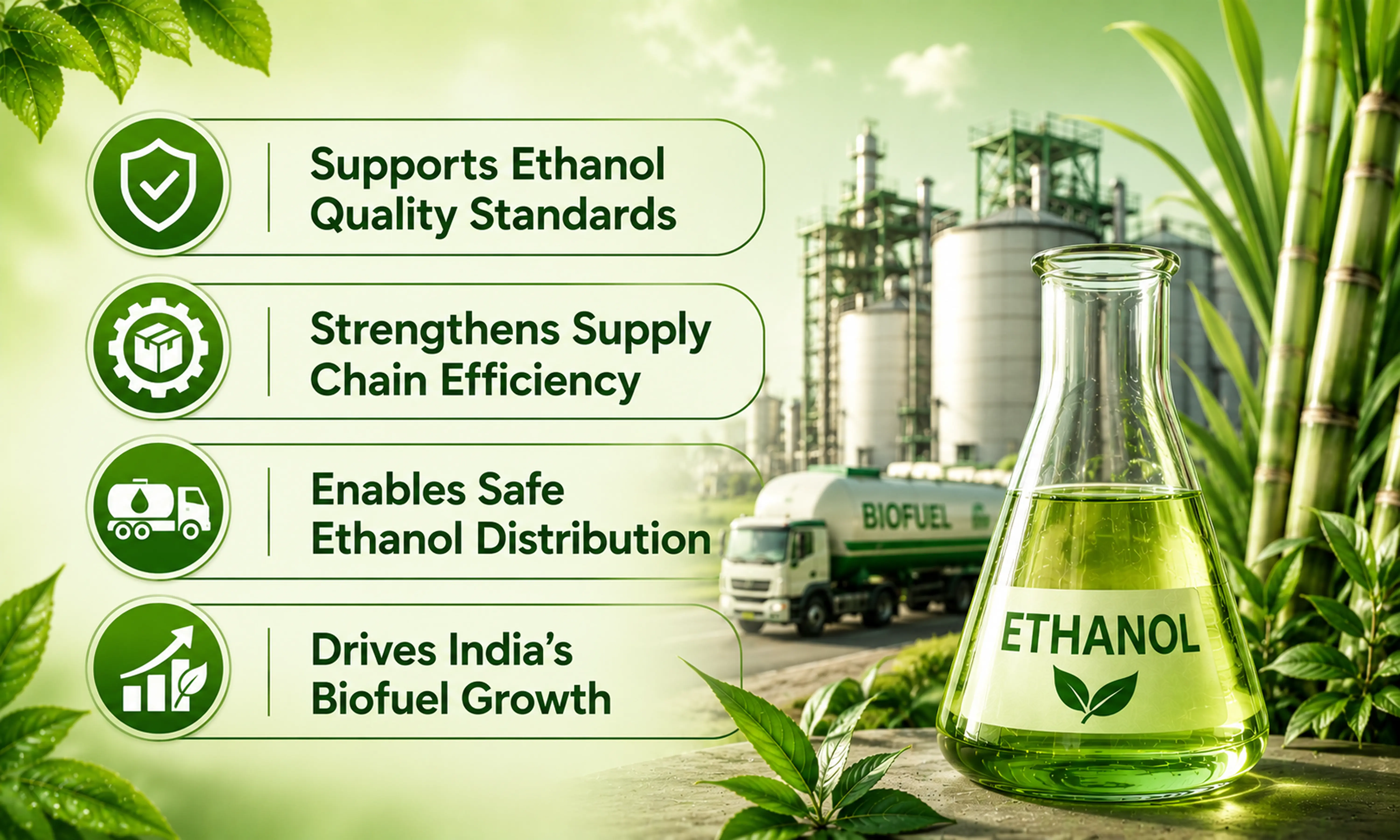
The most visible application of fuel ethanol is through ethanol blending.
Under India's Ethanol Blended Petrol Programme, ethanol is mixed with petrol before being distributed to fuel stations across the country.
The blend percentage is represented by the letter "E".
For example:
- E10 contains 10% ethanol and 90% petrol
- E20 contains 20% ethanol and 80% petrol
India successfully achieved approximately 20% blending during Ethanol Supply Year 2024–25, years ahead of the original target timeline.
This achievement represents one of the fastest large-scale ethanol adoption programmes in the world.
As India's distillery sector expanded capacity and improved production efficiency, AIDA actively supported industry discussions surrounding ethanol production, supply, policy development and long-term growth opportunities.
How Fuel Ethanol Reaches Your Petrol Tank?
The journey from farm to fuel station involves several steps.
First, ethanol is produced at distilleries located across the country. The product is then supplied to oil marketing companies under procurement programmes designed to support blending targets.
After procurement, ethanol is transported to fuel depots where it is blended with petrol before distribution.
The final product, commonly known as ethanol blended petrol, is then supplied to retail outlets nationwide.
For most consumers, the transition happens seamlessly. Vehicles manufactured in recent years are designed to operate efficiently on E20 fuel, allowing drivers to use blended fuel without changing their driving habits.
The Role of AIDA in India's Ethanol Ecosystem
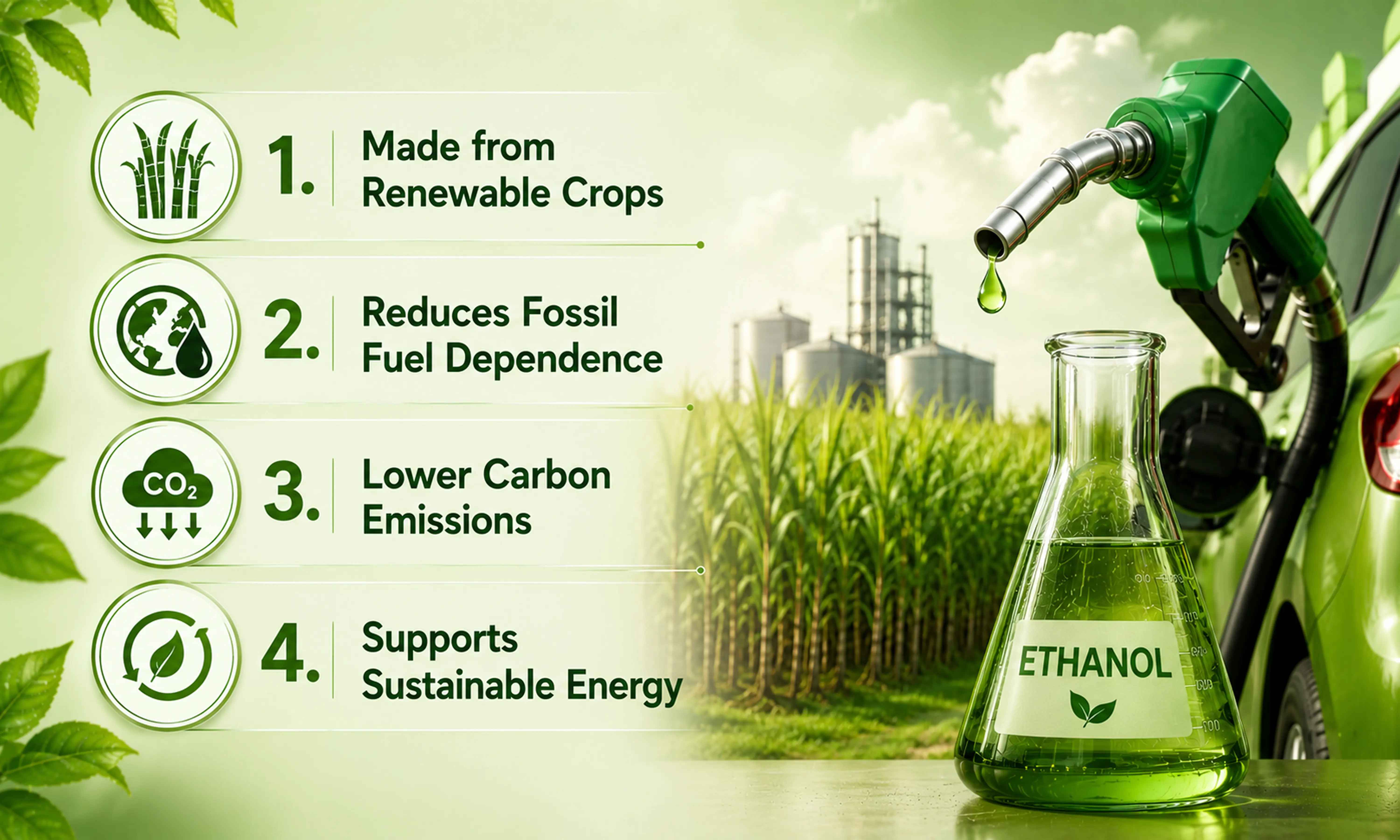
As India's ethanol sector expanded, industry coordination became increasingly important.
Representing members that account for more than 80% of the country's distillation capacity, AIDA has played an important role in supporting dialogue between industry stakeholders and policymakers.
Over the years, AIDA has consistently supported initiatives aimed at:
- Expanding ethanol production capacity
- Strengthening feedstock availability
- Encouraging higher ethanol blending levels
- Supporting flex-fuel vehicle adoption
- Promoting long-term biofuel development
As discussions evolve around E20, higher ethanol blends and future mobility solutions, AIDA continues to advocate for a balanced and sustainable approach to ethanol growth in India.
What Comes After E20?
Achieving E20 is not the end of India's ethanol journey.
The industry is already discussing higher ethanol blends, flex-fuel technologies and future fuel pathways that could increase ethanol usage even further.
Recent developments in vehicle certification and flex-fuel technologies have opened new possibilities for higher ethanol-compatible vehicles.
These developments represent the next stage in India's transition towards cleaner and more diversified fuel options.
For the ethanol industry, this creates opportunities for continued investment, innovation and capacity expansion.
For consumers, it means greater access to alternative fuel solutions in the years ahead.
Key Takeaways
- Fuel ethanol is a renewable alcohol produced from agricultural feedstocks such as sugarcane, maize and grains.
- It is also known as automotive ethanol, ethanol fuel and transport-grade ethanol.
- India achieved approximately 20% ethanol blending during Ethanol Supply Year 2024–25.
- Ethanol blending helps reduce crude oil imports and supports energy security.
- Fuel ethanol supports farmers, rural economies and domestic biofuel production.
- AIDA represents more than 80% of India's distillation capacity and continues to support the development of India's ethanol ecosystem.
- Discussions around higher ethanol blends and flex-fuel technologies represent the next phase of India's ethanol journey.
Frequently Asked Questions
What is fuel ethanol?
Fuel ethanol is a renewable alcohol produced from agricultural feedstocks and used in transportation fuels. It is blended with petrol to create fuels such as E10 and E20.
Is fuel ethanol the same as drinking alcohol?
The underlying molecule is the same, but fuel ethanol is processed and prepared specifically for transportation applications and is not intended for consumption.
Why is fuel ethanol important for India?
Fuel ethanol helps reduce crude oil imports, supports energy security, creates additional demand for agricultural feedstocks and contributes to India's biofuel objectives.
What is the difference between E10 and E20?
E10 contains 10% ethanol and 90% petrol, while E20 contains 20% ethanol and 80% petrol. India achieved approximately 20% blending during Ethanol Supply Year 2024–25.
About AIDA
The All India Distillers' Association (AIDA) is the apex national body representing India's distillery sector. Established in 1953, AIDA represents members accounting for more than 80% of the country's distillation capacity and actively supports the growth of ethanol, bioenergy and sustainable fuel initiatives in India through industry representation, policy engagement and knowledge leadership.