
Overview
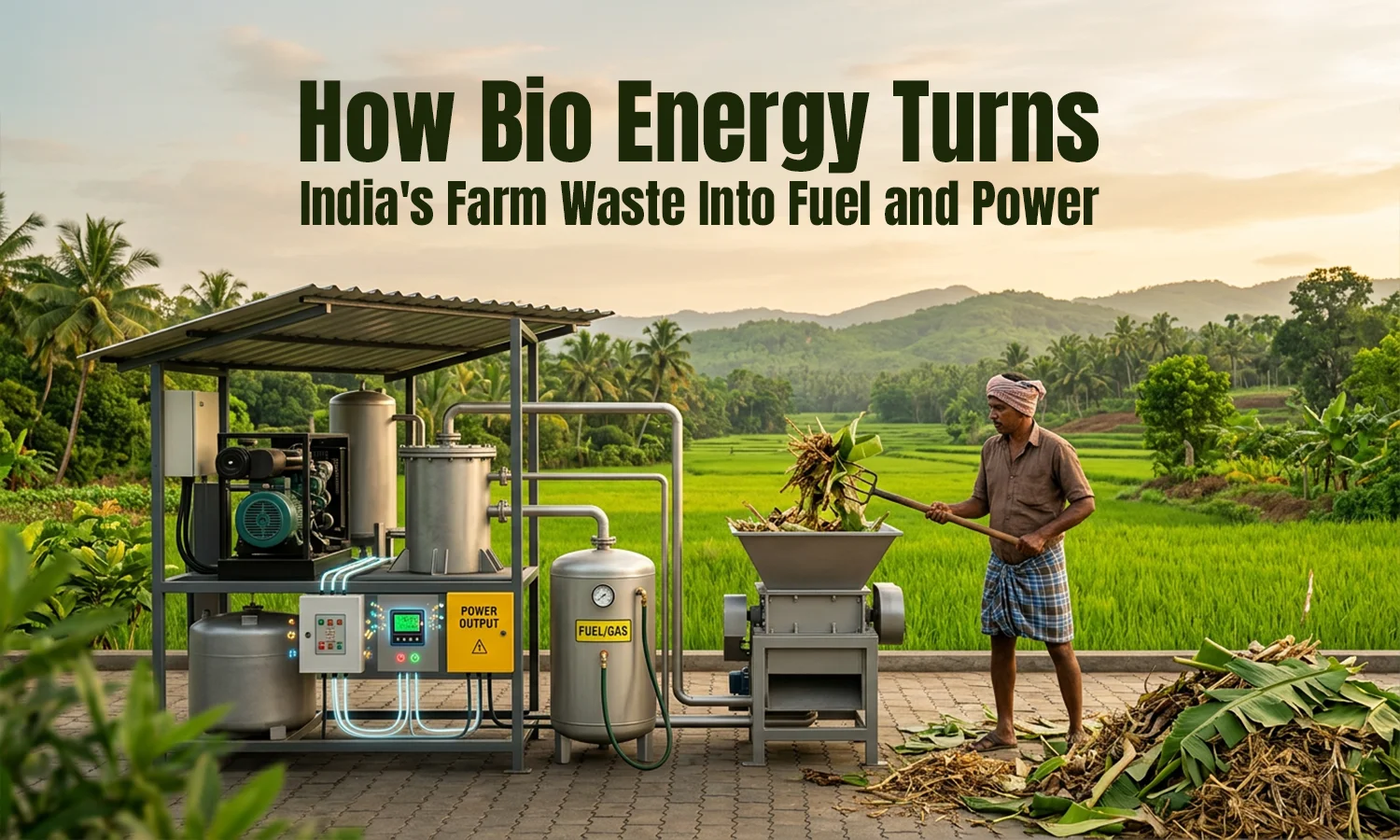
Bio energy is renewable power made from plants, crops and organic waste. In India it spans bioethanol for petrol, biogas for cooking and electricity, and residue-based fuels. It cuts oil imports, lowers emissions and returns income to farmers, making it a practical part of the country's wider clean energy mix.
Every harvest leaves something behind. Straw, husk, molasses and animal waste once treated as rubbish now hold real value as fuel. This is the promise of bio energy, the practice of drawing usable heat, gas and liquid fuel from living or recently living material rather than from fossil deposits laid down over millions of years.
India has taken this idea seriously. As a farming nation with vast crop surpluses and residues, it is well placed to grow bioenergy into a steady contributor to its power and transport needs, sitting alongside solar, wind and other renewables in a balanced strategy.
What Bio Energy and Biomass Mean?
The starting point for any discussion of bio energy is biomass. Biomass is simply organic matter such as sugarcane, maize, rice straw, wood chips, food waste and cattle dung. Because plants absorb carbon dioxide as they grow, converting them releases roughly what they took in, which keeps the carbon cycle closer to balance than fossil fuels ever manage.
There are several routes from biomass to energy. Some material is burned directly for heat. Some is fermented into alcohol. Some is broken down by bacteria into gas. Each path suits a different feedstock, and together they give bio energy a flexibility that few single technologies offer. This variety is one reason green energy planners treat biomass as a core resource rather than a niche one.
Bioethanol as a Liquid Bio Energy Fuel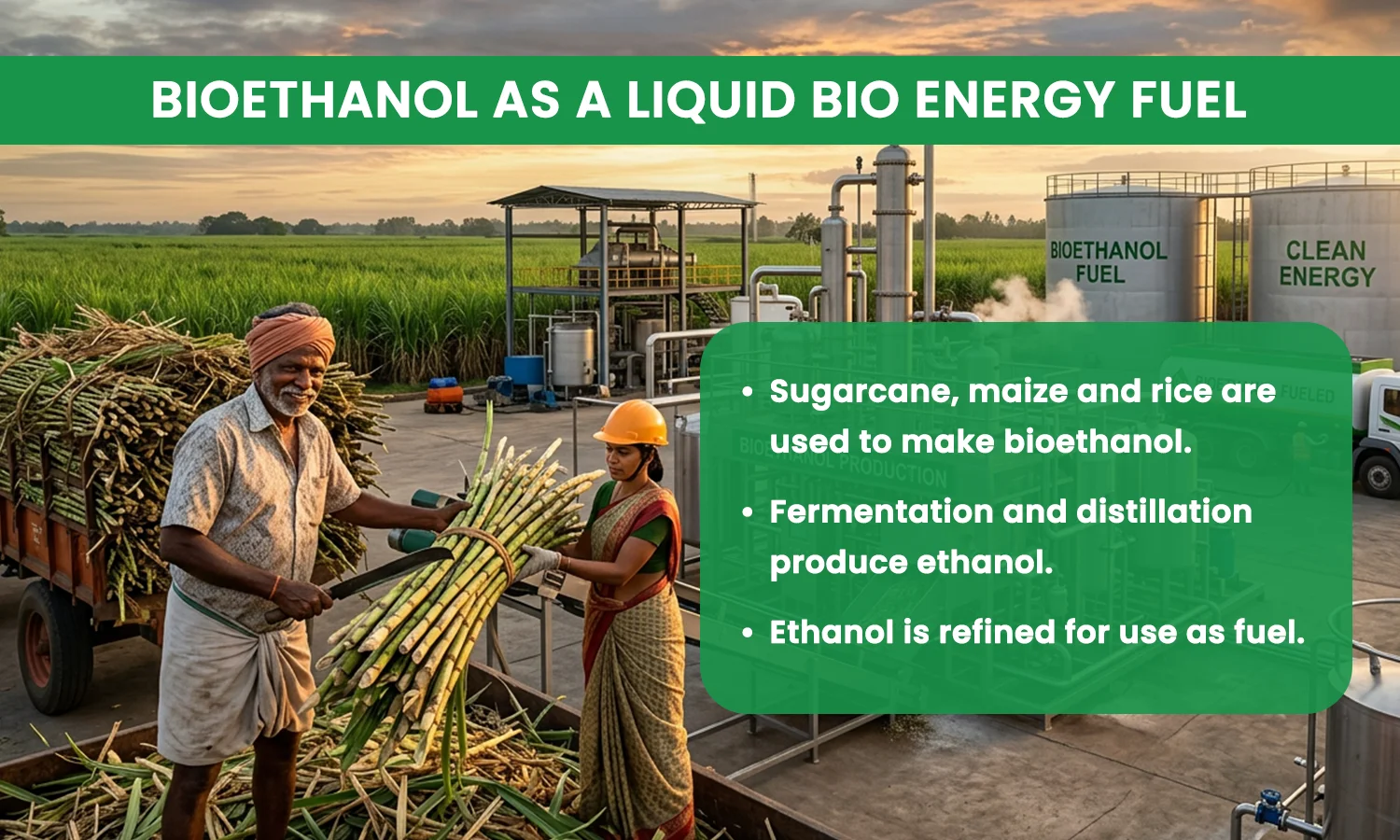
The most visible form of bio energy in India is bioethanol, the alcohol mixed into petrol nationwide. Bio ethanol is produced by fermenting sugars from sugarcane molasses, sugarcane juice, maize, surplus rice and damaged foodgrain, then distilling the result into engine-grade fuel.
The bio ethanol conversion process starts with feedstock preparation, moves through fermentation where yeast turns sugar into alcohol, and ends with distillation and dehydration. Understanding this bio ethanol conversion chain helps explain why a sugar by-product can end up in a car engine, and it links directly to our guide on fuel ethanol.
Curiosity about the fuel is easy to see. Many readers now look up bio ethanol online to understand how it is graded, stored and priced before it reaches the pump. Those searching for bio ethanol online are usually trying to learn how the fuel works rather than to buy it in bulk, since supply runs through licensed distilleries and oil companies. The strength of bio ethanol as a fuel is that India already grows its raw materials in abundance.
Biogas and Other Bio Energy Sources
Beyond liquid fuel, bio energy also arrives as gas. Biogas production relies on anaerobic digestion, where bacteria break down cattle dung, food waste and crop residue inside a sealed tank and release a methane-rich gas. This gas can be used for cooking, heating or generating electricity.
At village scale, small biogas systems give families a clean cooking fuel and a supply of nutrient-rich slurry that improves soil on their own fields. Larger community and industrial biogas systems feed local grids or compress the gas for transport. India's push for compressed biogas has made biogas production a growing part of the rural fuel picture.
The appeal of biogas energy is its double benefit. It manages waste that would otherwise rot in the open, and it turns that waste into usable power. In this sense biogas energy captures the circular logic that runs through all forms of bioenergy.
Comparing India's Main Bio Energy Sources
The different strands of bio energy are easier to weigh side by side. The table below sets out the main sources India uses, what feeds them and where they fit in daily life
| Bio Energy Source | Main Feedstock | Typical Use |
Bioethanol |
Sugarcane molasses, maize, surplus grain |
Mixed into petrol for transport |
Biogas |
Cattle dung, food and farm waste |
Cooking, heating and electricity |
Solid biomass |
Wood chips, rice husk, bagasse |
Heat and power generation |
Second-generation ethanol |
Paddy straw and crop residue |
Advanced transport fuel |
No single source does everything. Their real value comes from working together, matching the right waste stream to the right end use across homes, farms and vehicles.
Is Bioenergy Renewable and Sustainable
Is Bioenergy Renewable? The honest answer is yes, with conditions. Crops and waste regrow within months or a few years, unlike fossil fuels that take geological ages, so the source can be replenished again and again. This is the central reason bio energy is classed among renewables.
Sustainability depends on how it is managed. Good sustainability and energy management means using genuine waste and residues, avoiding deforestation, and not diverting food that people need. Where those rules hold, the fuel stays genuinely green.
This is why careful sustainability and energy management matters as much as the technology itself. Our wider look at sustainability explains how India tries to keep this balance while scaling up renewable fuel.
Bio Energy and India's Rural Economy
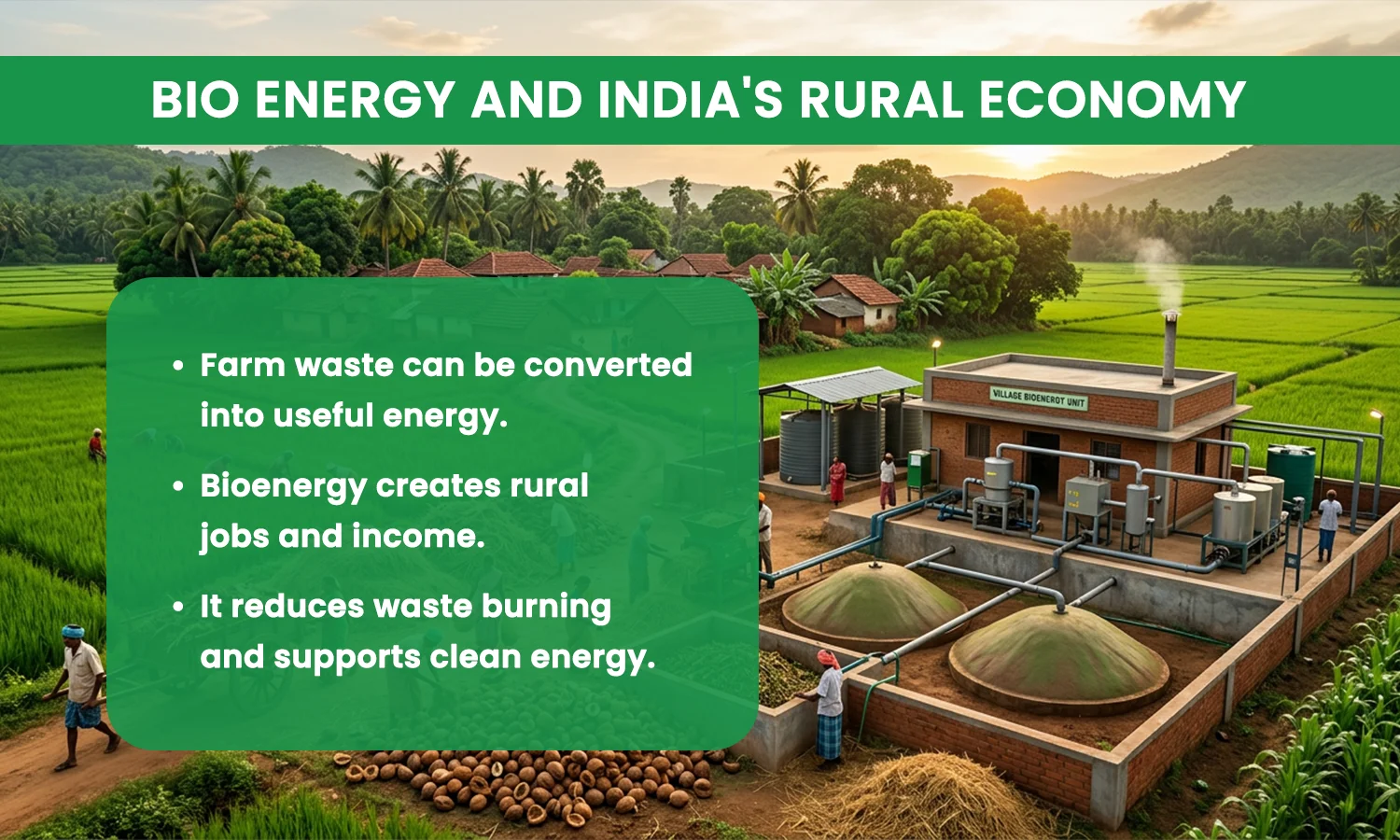
What Are the Benefits of Bioenergy for a farming country? The clearest gain is income. When straw, molasses and dung gain value, money flows back to villages instead of leaving the country to pay for imported oil. India imports over 85% of its crude oil, so every domestic litre of fuel keeps wealth at home.
The rural payoff is real. The national ethanol programme alone has channelled more than 1.66 lakh crore rupees toward farmers since 2014-15, turning bio energy into a source of village income as well as cleaner air. This circular use of farm waste, growing a crop, using the grain or sugar, then converting the residue, is what makes bio energy so well suited to India.
Why Is Bioenergy the Future of rural energy in particular? Because it solves several problems at once. It reduces open burning of paddy straw, cuts import bills, and supports cleaner transport when paired with clean mobility options. Presented honestly, bio energy is one strong part of a mix that also includes solar, wind and electric power, not a single fix.
Be Part of India's Renewable Fuel Story
As the apex body for ethanol, bioenergy and potable alcohol, AIDA supports the farmers and distilleries turning India's crop waste into clean fuel. Follow developments across India's bioenergy and renewable fuel sector at All India Distillers Association, and learn how these resources are shaping a more self-reliant energy future.
Key Takeaways
- Bio energy is renewable power made from crops, residues and organic waste rather than fossil fuel.
- Bioethanol, biogas and solid biomass are the main forms India uses, each suited to a different feedstock.
- Because biomass regrows quickly, bio energy is counted as renewable when waste-based feedstocks are used responsibly.
- Farm waste turned into fuel returns income to villages, with over 1.66 lakh crore rupees sent to farmers since 2014-15.
- Bioenergy works best as one part of India's wider clean energy plan, alongside solar, wind and electric power.
Frequently Asked Questions
What is bio energy in simple terms?
Bio energy is energy made from living or recently living material such as crops, wood and organic waste. It reaches us as bioethanol in petrol, biogas for cooking and power, and solid fuels for heat. The raw material can be regrown, so the supply keeps renewing itself.
Is Bioenergy Renewable?
Yes. Biomass regrows within months or a few years, while fossil fuels take millions of years to form. As long as feedstocks come from genuine waste and responsibly managed crops, the source keeps replenishing, which is why bioenergy sits firmly among renewable options.
What Are the Benefits of Bioenergy?
The main benefits are cleaner air, lower oil imports and rural income. Bioenergy uses waste that would otherwise rot or be burned, cuts the crude India buys from abroad, and pays farmers for their residues. It also fits the existing fuel network, so adoption is easier than many alternatives.
Why Is Bioenergy the Future?
For a farming nation, bio energy turns a waste problem into a fuel supply while keeping money at home. It will not replace petrol or electricity on its own, but as one strand of a broader clean energy plan it has a lasting role in India's transport and rural power.