
Overview
India's fuel future will not depend on a single fuel. Ethanol, electric vehicles, hydrogen, CNG and biodiesel each have a part in cutting oil imports and emissions. India already runs on E20 petrol, reached years early, showing how fast a diversified fuel mix can take shape.
Ask most people what powers a car and the answer is petrol or diesel. That picture is changing quickly. The fuel future of the country is being shaped by several technologies at once, from crop-based ethanol to battery electric vehicles, and no single option will carry the whole load.
India imports over 85% of its crude oil, so the direction of India's fuel future matters for both the economy and the air people breathe. The sensible approach is not to pick one winner but to build a mix that suits different vehicles, regions and budgets.
What India's Energy Mix Looks Like Today?
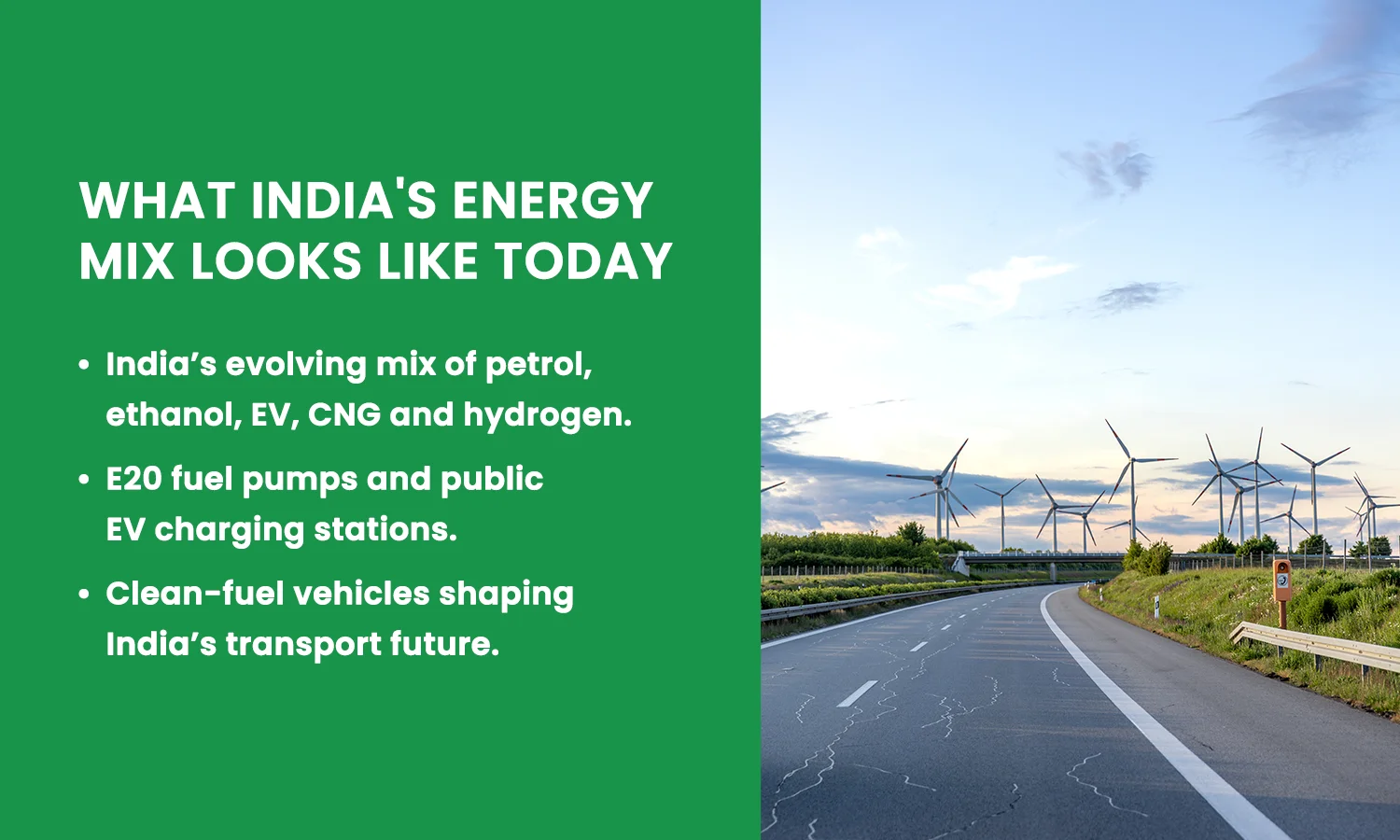
The country is not betting everything on one technology. India's energy future is taking shape across several tracks at the same time, each solving a different part of the problem. Petrol and diesel still lead, but their share is slowly giving way to cleaner options.
Ethanol has moved fastest. India reached about 20% ethanol blending, known as E20, in the 2024-25 supply year, about five years ahead of the 2030 target. Alongside it, electric vehicles, CNG and early hydrogen pilots are all finding their place. This spread is what makes the fuel future here different from a simple switch from one fuel to another.
Comparing India's Main Fuel Pathways
Each pathway has strengths and limits. No option is perfect, and honest comparison helps explain why a diversified plan makes sense for the kind of renewable fuel India is building.
| Fuel pathway | Main strength | Main limit | Best suited to |
Ethanol and biofuels |
Uses crops India grows, works with existing petrol pumps |
Slightly lower energy per litre than petrol |
Cars, two-wheelers, existing engines |
Electric vehicles |
Zero tailpipe emissions, low running cost |
Charging network and battery supply still growing |
City travel, short daily travel |
Hydrogen |
Clean for heavy transport, quick refuelling |
Costly to produce and store today |
Trucks, buses, long-haul freigh |
CNG |
Lower emissions than diesel, established network |
Still a fossil fuel, limited range |
Buses, taxis, light commercial |
Biodiesel |
Made from waste oils, cuts diesel imports |
Feedstock supply is limited |
Trucks, generators, farm equipment |
The table shows why sustainable fuel solutions need to work together rather than compete. A truck fleet may lean on hydrogen or biodiesel, while a family car runs on ethanol petrol and a city scooter goes electric. Reading it this way makes the case for variety in sustainable fuel solutions clear.
Why India Needs Many Fuels, Not One?
What is the future of fuel in India as demand keeps rising? The honest answer is that no single fuel will carry it. Relying on one source is risky, since oil prices swing and no technology fits every use. A diversified plan protects the country and gives drivers choice, which is the logic behind India's fuel future.
Ethanol suits the millions of petrol vehicles already on the road. Electric vehicles work well for short daily travel in cities. Hydrogen and biodiesel answer the harder problem of heavy freight. Together they form a green fuel ecosystem where each fuel covers the gaps the others leave.
This is also why the biofuel future India is planning looks broad rather than narrow. Sugarcane molasses, maize, surplus rice and crop residue all feed ethanol production, while used cooking oil and other waste support biodiesel. The strength of the green fuel ecosystem lies in using resources the country already has. The wider view sits in our green energy pillar, while the role of crop-based power appears in the guide to bio energy.
Policy Steering the Change
Policy has been the engine behind this shift. The National Policy on Biofuels of 2018, amended in June 2022, advanced the E20 target from 2030 to 2025-26, widened the list of feedstocks and allowed exports in specified cases, giving industry the confidence to invest.
The Ethanol Blended Petrol Programme is the clearest result. Blending rose from 1.53% in 2013-14 to about 19.9% in 2024-25, with July 2025 averaging 19.93%. Ethanol production capacity grew from under 2 billion litres in 2014 to nearly 20 billion litres, close to the 11 billion litres that E20 needs. Steady policy of this kind turns a plan for India's fuel future into real litres at the pump.
These measures carry a clear payoff. Since 2014-15 the programme has substituted nearly 316 lakh metric tonnes of crude oil, saved more than 1.4 lakh crore rupees in foreign exchange and avoided around 950 lakh metric tonnes of carbon dioxide. Our work on sustainability looks at these gains in more detail.
Where Ethanol and Biofuels Fit?
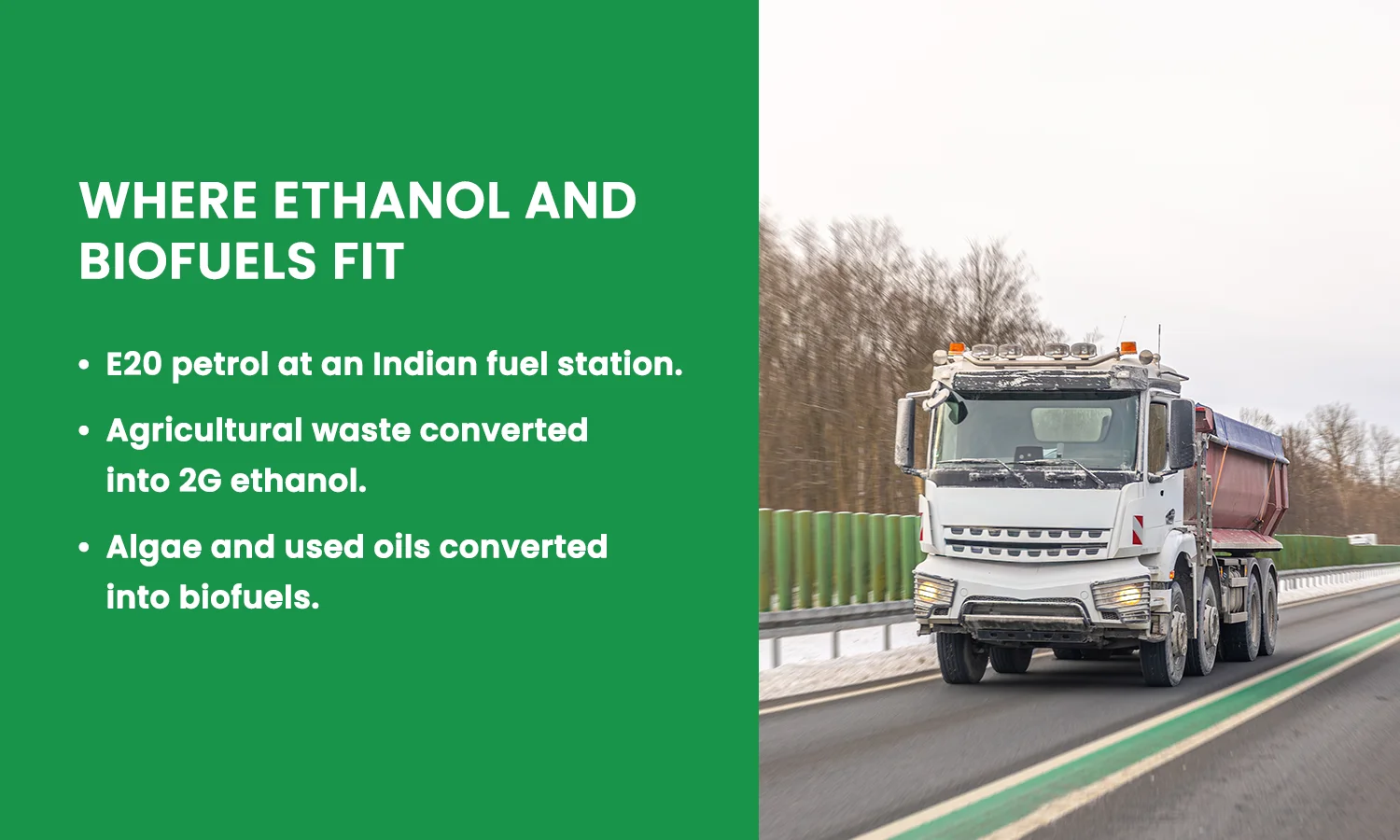
Ethanol is the most visible piece of India's energy future today, yet it works best as part of a set. Second-generation ethanol from paddy straw and third-generation ethanol from algae widen the base further, so growth does not rest on food crops alone. These advanced routes keep the biofuel future India is planning resilient even as feedstocks change.
The future of biodiesel fits alongside this. Made from used cooking oil and non-edible oils, it can cut diesel imports for trucks and generators without competing with the food chain. The future of biodiesel in India is smaller than ethanol for now, but it fills a real gap in heavy transport.
Farmers gain the most direct benefit. The ethanol programme has channelled more than 1.66 lakh crore rupees toward farmers and about 1.96 lakh crore rupees to distilleries since 2014-15. This rural income stream is a quiet strength of the fuel future India is building, and it explains why so many treat biofuels as central. Our guide to alternative fuel options sets ethanol against the wider field, and the fuel ethanol explainer covers the science.
Be Part of India's Fuel Story
The shift to many fuels is already underway at pumps across the country. As the apex body for ethanol, bioenergy and potable alcohol, AIDA supports the distilleries and farmers driving this change. Stay informed on the fuels, technologies and developments shaping India's energy transition through All India Distillers Association.
Key Takeaways
- India's fuel future rests on several fuels working together, not on one technology alone.
- India reached E20 ethanol petrol in 2024-25, about five years ahead of the original 2030 target.
- Ethanol, electric vehicles, hydrogen, CNG and biodiesel each suit different vehicles and journeys.
- Policy such as the National Policy on Biofuels and the Ethanol Blended Petrol Programme drives the shift.
- Biofuels support farmers and cut oil imports, making them a core part of what renewable fuel India is developing.
Frequently Asked Questions
What does India's fuel future look like?
India's fuel future is a mix rather than a single fuel. Ethanol petrol, electric vehicles, CNG, hydrogen and biodiesel each take a share, matched to the vehicles and journeys they suit best. This variety lowers oil imports, supports farmers and cuts emissions together.
What is the future of fuel in India
The direction points toward diversity backed by policy. Ethanol has already reached E20, while electric and hydrogen options grow for city travel and heavy freight. The aim is energy security through many domestic sources rather than one imported fuel.
Will ethanol replace petrol in India's fuel future?
Not on its own. Ethanol is a major part of India's fuel future, but it sits beside electric, CNG, hydrogen and biodiesel. Each answers a different need, and ethanol stands out because it uses crops India already grows and works with the existing petrol network.
How does biodiesel fit in?
Biodiesel made from waste oils cuts diesel use in trucks, generators and farm equipment. It is smaller than ethanol today, yet it strengthens the fuel future by covering heavy transport that lighter options struggle to reach.