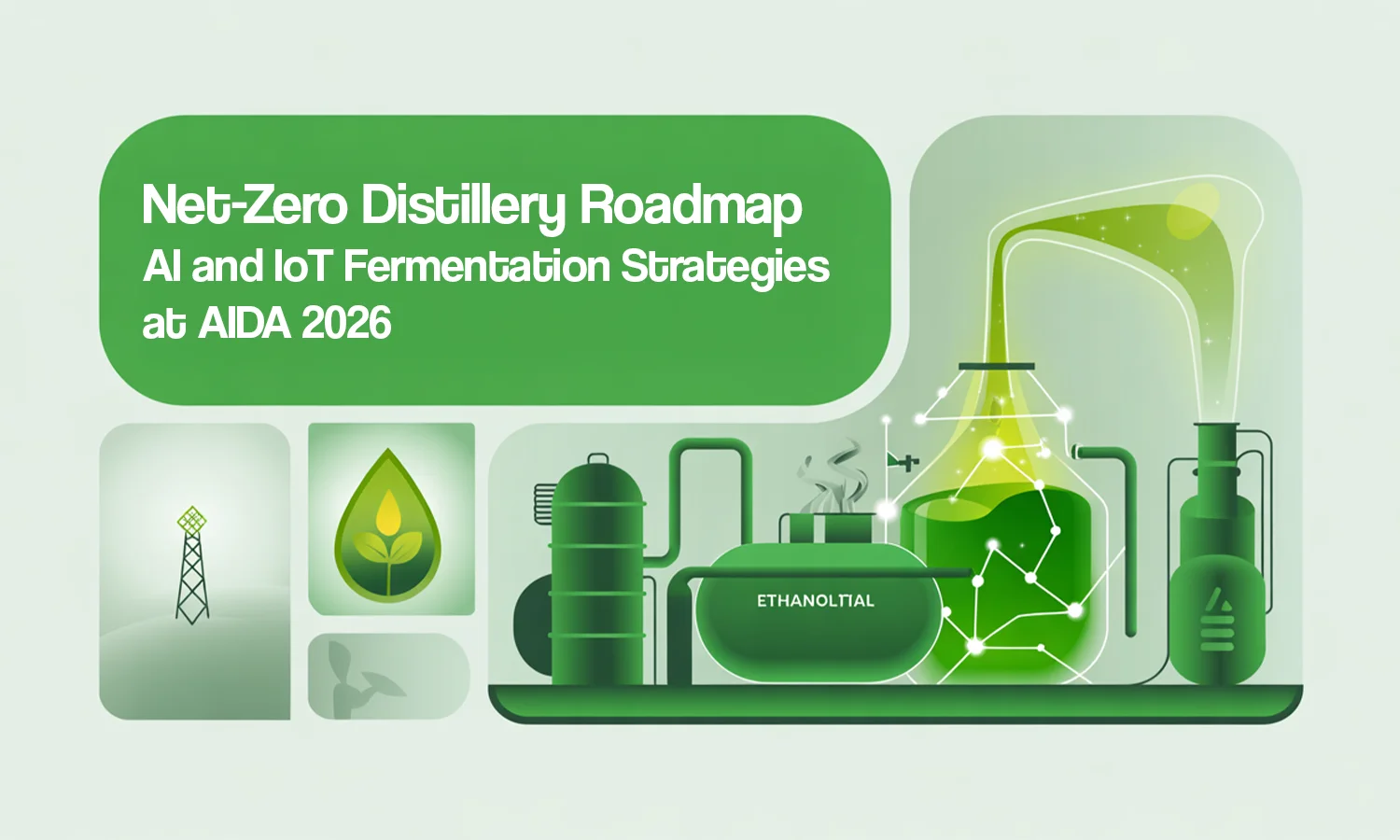
Energy efficiency has become a central discussion in India’s ethanol sector. As capacity expands across the country, distilleries are expected to produce more fuel while reducing emissions and resource consumption. The idea of a net-zero distillery is therefore moving from concept to operational priority.
This transition will be a key conversation at the AIDA Annual Distillers' Conclave 2026, scheduled for 24 March 2026 at The Grand, New Delhi. The session on digital fermentation and energy optimisation will focus on how technology is reshaping the way distilleries operate.
India’s ethanol program has scaled rapidly over the last decade. Ethanol production in India has crossed 12 billion litres annually, supported by strong policy direction and demand for ethanol-blended petrol. Maintaining this growth while lowering the environmental footprint of each facility is now the next challenge.
Technology and the Net-Zero Distillery Conversation
Digital systems are beginning to play a larger role in distillery operations. Many facilities are already examining how AI in manufacturing can improve fermentation monitoring, yield prediction and process control.
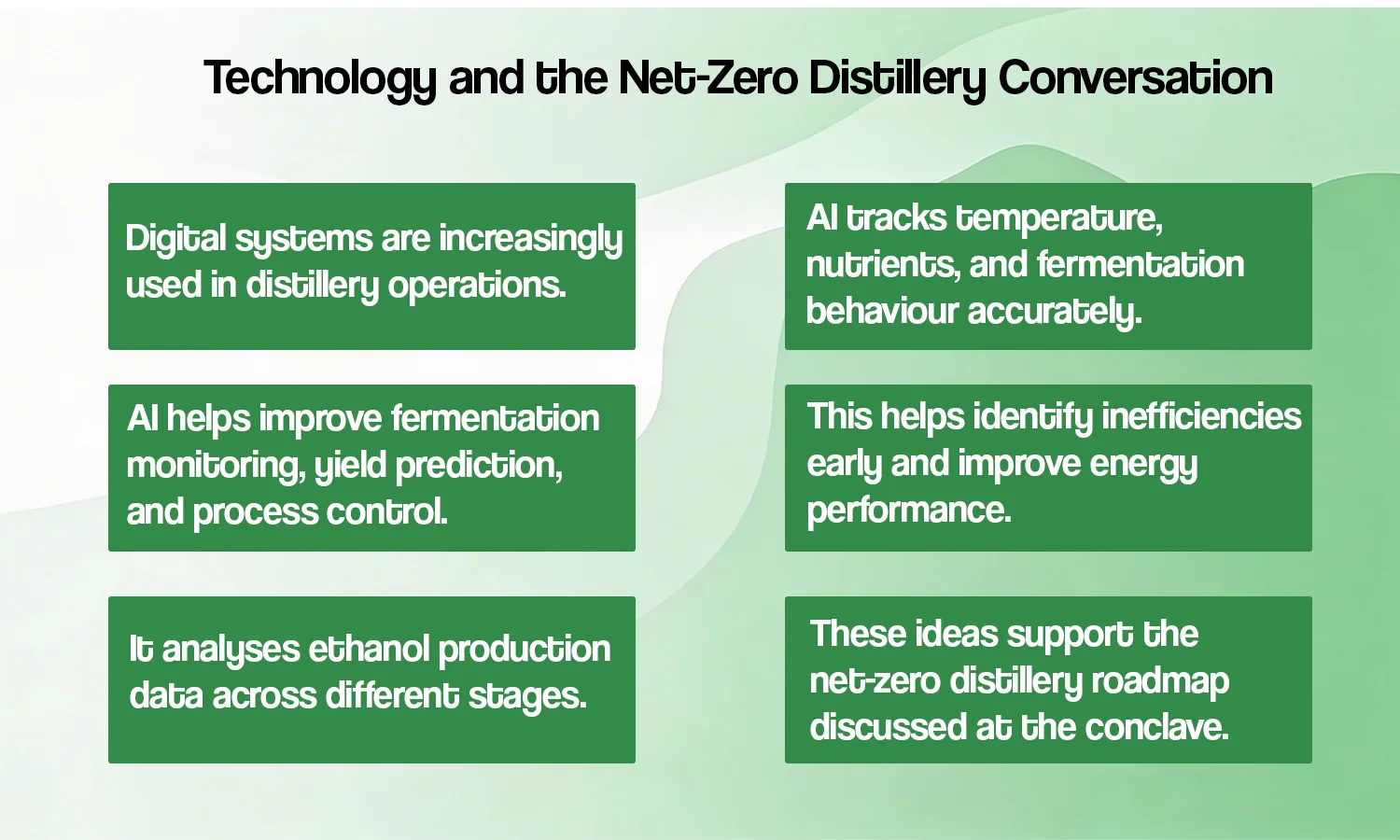
AI models analyse production data across multiple stages of ethanol production. Temperature shifts, nutrient balance and fermentation behaviour can be tracked with far greater accuracy. This helps teams correct small inefficiencies early, which directly improves energy performance. These discussions form a core part of the net-zero distillery roadmap being examined at the conclave.
IoT and Energy Visibility Inside Distilleries
Another major area of focus is IoT in manufacturing, which allows distilleries to monitor operations in real time. Sensors placed across an ethanol plant measure steam flow, water consumption and power usage throughout the production cycle.
These inputs feed into industrial energy management systems that allow teams to understand how energy moves through the facility. Better visibility leads to faster operational adjustments, helping distilleries maintain stable output while reducing waste.
The result supports a broader industry shift toward sustainable biofuel production, where operational efficiency becomes as important as production capacity.
What the Conclave Will Bring to the Table
The discussion at AIDA Conclave 2026 is expected to focus on practical questions facing the industry:
♦ How digital fermentation models can improve production consistency
♦ How connected sensors help monitor energy and water use
♦ How distilleries can move steadily toward a net-zero distillery model
These conversations matter because reliable ethanol supply and efficient ethanol distribution depend on stable operations across the entire production network.
Key Takeaways
♦ The net-zero distillery concept is becoming a priority as ethanol capacity expands.
♦ AI tools are improving fermentation monitoring and operational efficiency.
♦ IoT sensors are helping distilleries track energy consumption in real time.
♦ Energy management systems support consistent ethanol production at scale.
♦ These themes will shape one of the key sessions at AIDA Conclave 2026.
Conclusion
India’s ethanol program is entering a more mature phase. The focus is gradually shifting from expanding capacity to improving how each facility operates.
The net-zero distillery roadmap reflects this shift. Technology, operational discipline and energy visibility are becoming essential parts of modern distillery management. The AIDA Annual Distillers' Conclave 2026 provides a platform where these operational ideas will be examined by leaders across the sector.
FAQs
What does the net-zero distillery concept mean for the ethanol industry?
A net-zero distillery focuses on reducing emissions and resource consumption during ethanol production. The idea is to maintain output while lowering energy waste through better monitoring, process optimisation and digital systems.
How does AI help improve ethanol production processes?
AI systems analyse fermentation data and operating conditions across production units. By identifying patterns and inefficiencies early, teams can improve batch consistency and reduce energy consumption during ethanol production.
Why is IoT important for distillery operations?
IoT sensors collect real-time data from multiple points across the facility. This allows distilleries to monitor energy use, water consumption and process stability more accurately, helping operations move closer to a net-zero distillery model.
Why is this topic important at AIDA Conclave 2026?
As ethanol production in India continues to grow, improving operational efficiency becomes essential. Discussions around the net-zero distillery roadmap help the industry examine how digital technologies can support long-term sustainability and production stability.