
Overview
The petrol ethanol content is the single number that tells you how much of your fuel came from a farm. When a pump reads E20, a fifth of that petrol is crop-based alcohol. India pushed this figure to 20 percent during Ethanol Supply Year 2024 to 2025, years ahead of the original 2030 plan. As the apex distillers' body since 1953, the All India Distillers Association (AIDA) represents the producers behind that climb. Here is how to read the number and why it keeps rising.
What petrol ethanol content actually measures
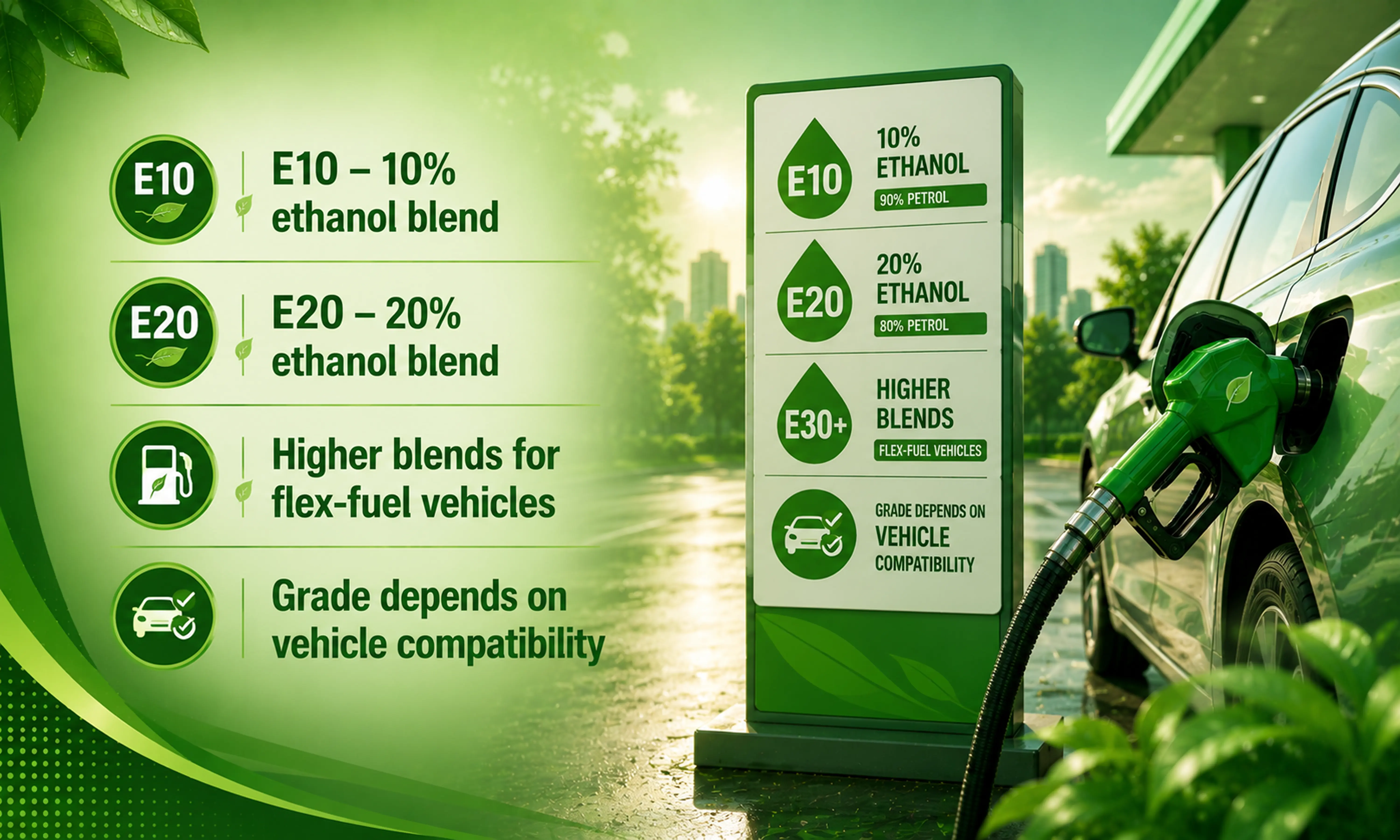
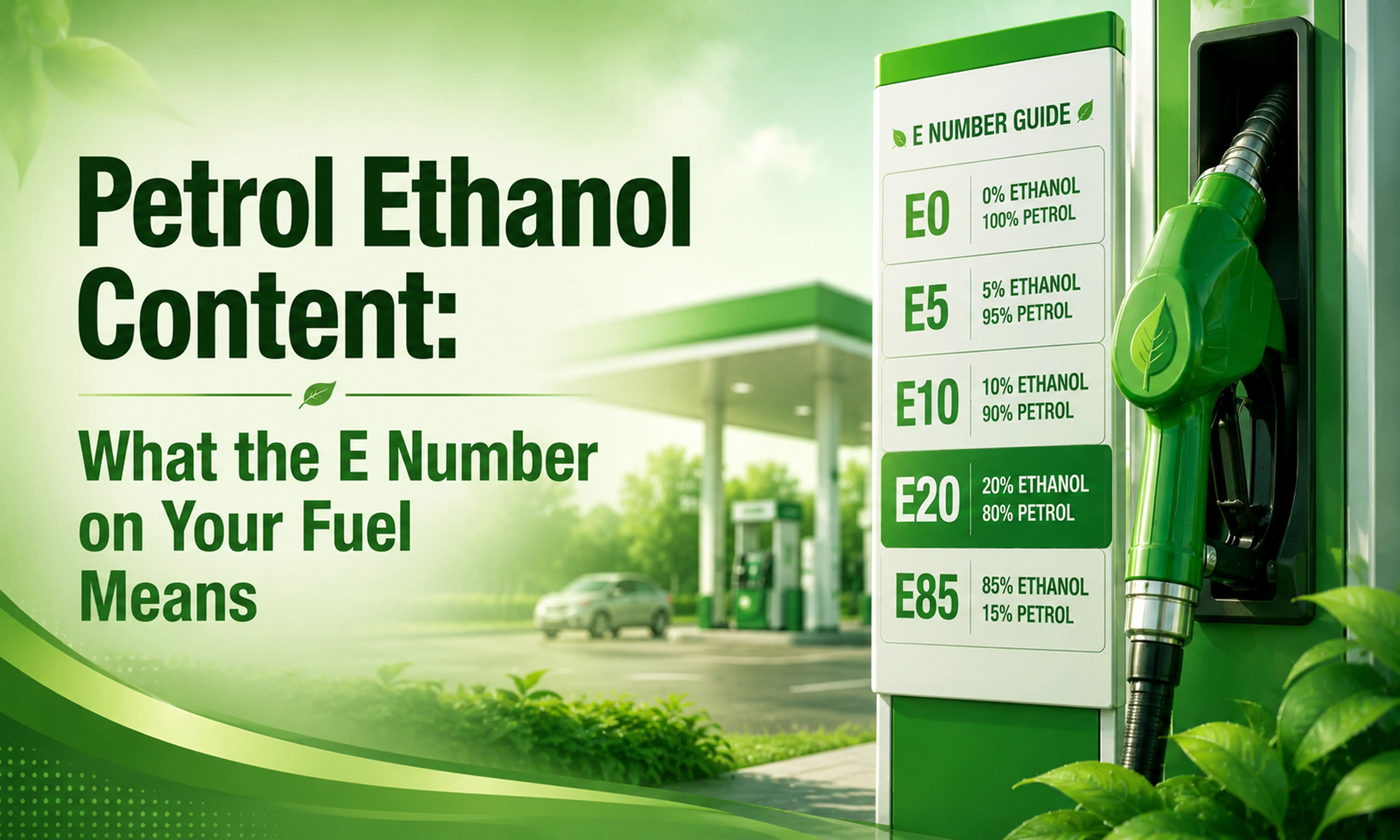
Petrol ethanol content measures the percentage of alcohol mixed into petrol by volume. The E number does the talking: E10 means 10 percent, E20 means 20 percent. The rest is conventional petrol refined from crude oil.
Raising it is the whole point of ethanol blending, the practice of mixing dehydrated alcohol into fuel. As ethanol blending scaled up across India, the average E number on the forecourt climbed from low single digits to 20 percent in about a decade.
Ethanol petrol grades you will see at the pump
Sold simply as ethanol petrol, the fuel comes in grades named by their alcohol share. E10 was the milestone India hit in 2022, and E20 followed in 2024 to 2025. Each grade of ethanol petrol is the same base petrol with a higher dose of alcohol.
Higher petrol ethanol content does change the fuel slightly. The alcohol carries a little less energy per litre than petrol, so very high grades can trim mileage. For E20, government-backed studies put the change at roughly one to six percent depending on the vehicle.
The fuel ethanol behind the percentage
Behind every percentage point sits fuel ethanol, crop-based alcohol dried until it is nearly water free. Refiners buy this fuel ethanol from distilleries and mix it at depots, which is how the petrol ethanol content on the pump is set.
Because it powers engines, this input is also called ethanol fuel. A steady supply of ethanol fuel is what allowed India to lift the national figure to 20 percent without shortages, drawing on sugarcane, maize and surplus grain.
Why automotive ethanol must meet a strict grade
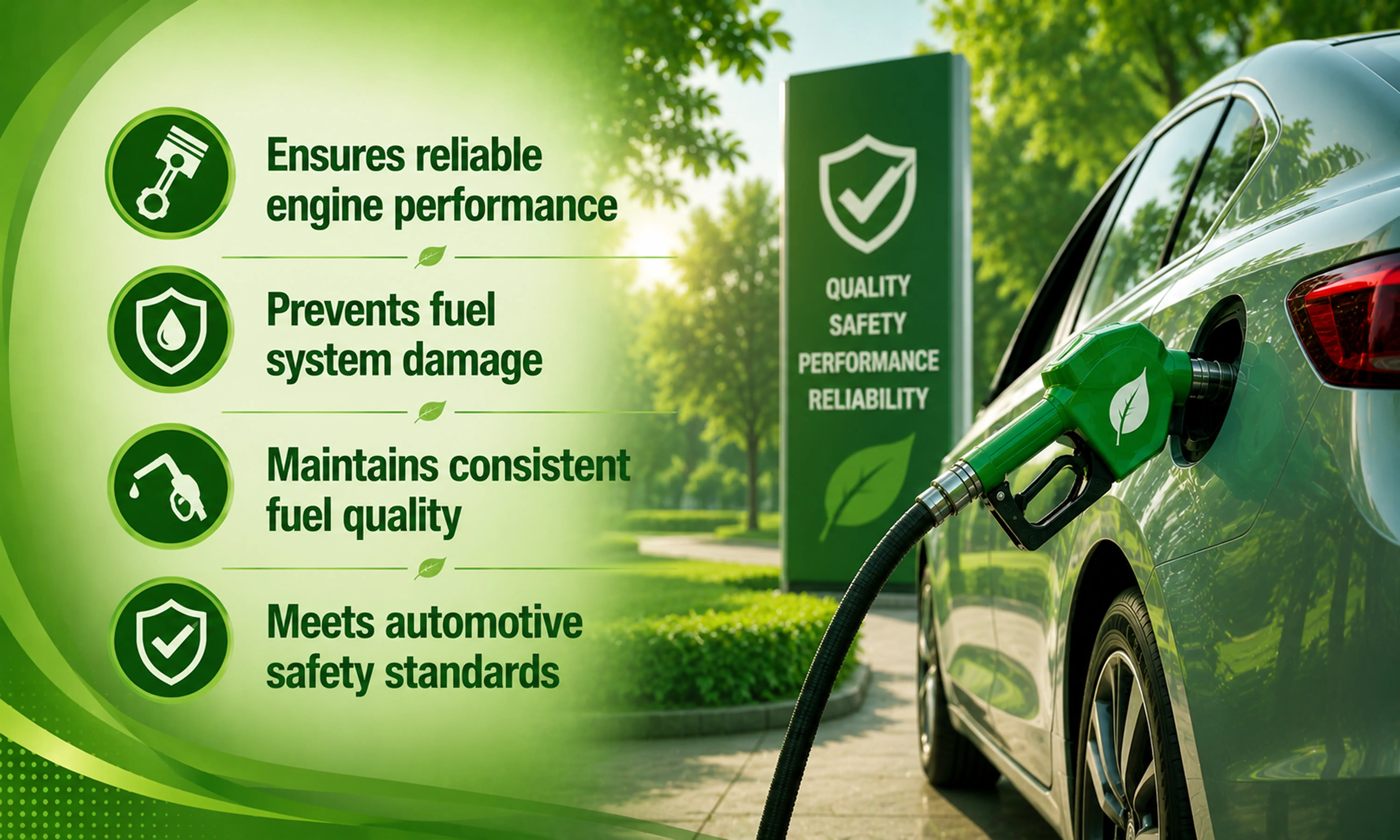
The alcohol mixed into petrol is automotive ethanol, and it has to clear tough purity rules before it touches a vehicle. Water, acids and impurities are kept to tight limits so the automotive ethanol does not corrode fuel systems or separate inside the tank.
To travel long distances and fire reliably, the alcohol must also qualify as transport-grade ethanol. The Bureau of Indian Standards sets the specification for transport-grade ethanol, which keeps the petrol ethanol content consistent and safe across every state.
How high can petrol ethanol content go
With E20 achieved, the question is how far the petrol ethanol content can rise. The Bureau of Indian Standards has been preparing specifications for grades above E20, and flex-fuel vehicles can already handle far higher shares. The number on your pump may climb again in the years ahead.
KEY TAKEAWAYS
- Petrol ethanol content is the percentage of alcohol in petrol, shown by the E number, so E20 means 20 percent.
- India raised the average to 20 percent in Ethanol Supply Year 2024 to 2025, ahead of schedule.
- The alcohol used is fuel ethanol, also called ethanol fuel and automotive ethanol, dried to a strict transport grade.
- Higher content can trim mileage slightly, by about one to six percent for E20 depending on the vehicle.
- Grades above E20 and flex-fuel vehicles point to even higher petrol ethanol content ahead.
FREQUENTLY ASKED QUESTIONS
Q1. What does petrol ethanol content mean?
Petrol ethanol content is the share of alcohol mixed into petrol, measured by volume and shown by the E number. E10 has a petrol ethanol content of 10 percent and E20 has 20 percent. The remainder is conventional petrol. Raising this figure is the goal of India's ethanol blending programme.
Q2. What is the current petrol ethanol content in India?
India reached an average petrol ethanol content of around 20 percent during Ethanol Supply Year 2024 to 2025, meaning E20 is now the common grade at most outlets. This milestone arrived roughly five years ahead of the original 2030 target set under the National Policy on Biofuels.
Q3. Does higher petrol ethanol content reduce mileage?
It can slightly reduce mileage because the alcohol holds a little less energy per litre than petrol. For E20, government-backed studies place the change between roughly one and six percent, depending on the vehicle's age and engine tuning. Newer E20-ready vehicles show the smallest effect.
Q4. How is petrol ethanol content controlled for quality?
It is controlled by mixing only automotive ethanol that meets strict purity rules as transport-grade ethanol. The Bureau of Indian Standards sets the specification, limiting water and impurities. Oil companies add measured quantities of fuel ethanol at depots so the petrol ethanol content stays accurate and consistent across regions.
ABOUT AIDA
AIDA, the All India Distillers' Association, has been the voice of Indian distilleries since 1953 and is recognised as the apex national body for ethanol, bioenergy and potable alcohol. Its members hold more than 80 percent of the country's distillation capacity. Read more across the cluster at aidaindia.org.