India’s distillery sector operates at the intersection of energy policy, agriculture economics and state regulation. While ethanol production has received national attention because of fuel blending targets, the potable alcohol segment continues to face complex regulatory challenges across different states.
The AIDA Annual Distillers’ Conclave 2026, taking place on 24 March at The Grand Hotel, New Delhi, will bring this issue to the forefront. One of the key sessions will examine how policy frameworks, taxation structures and state excise systems influence the long-term viability of the distillery industry in India.
This conversation is particularly important because distilleries today balance two major markets: fuel ethanol production and the rapidly evolving Indian spirits market.
Understanding the Policy Environment of the Distillery Industry
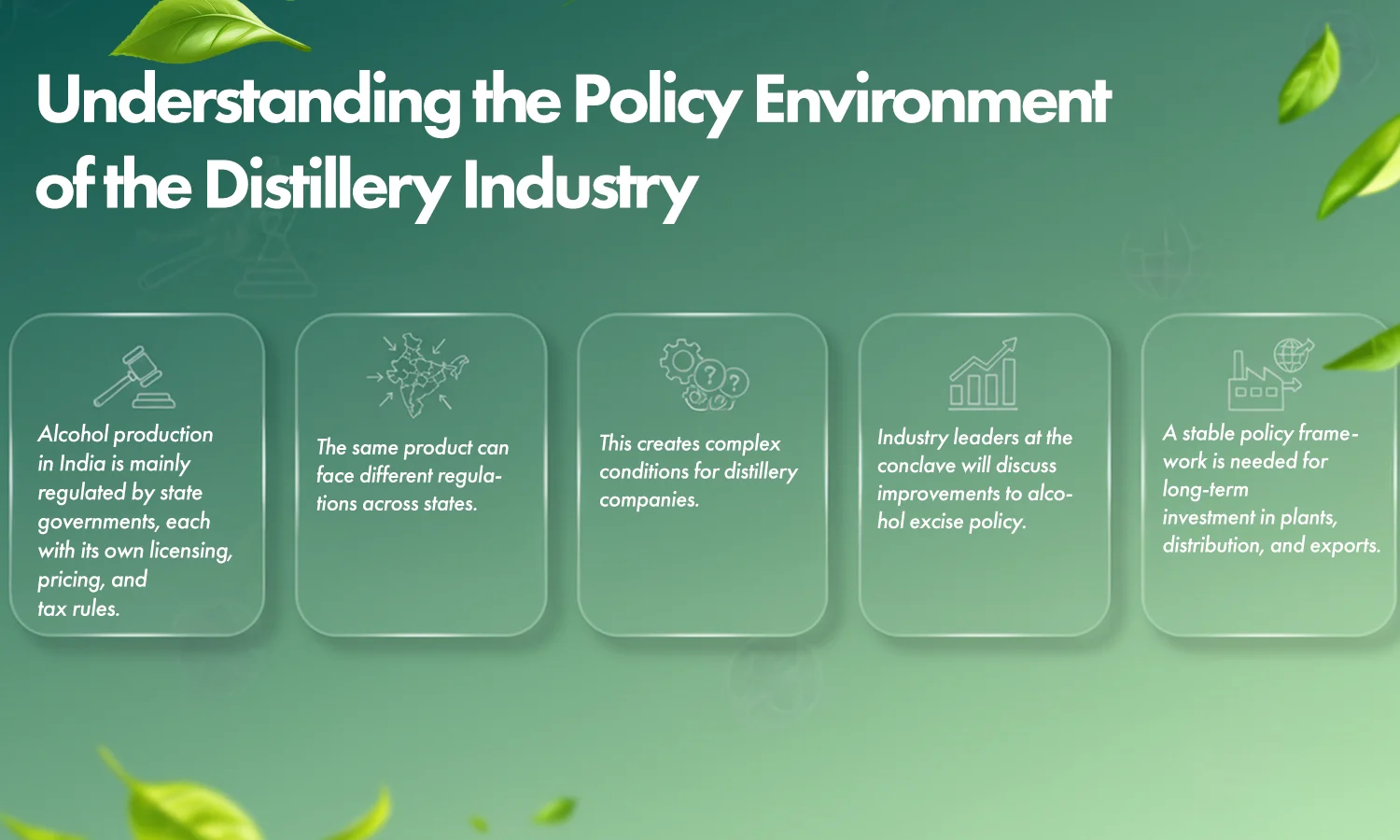
Unlike many other industries, alcohol production in India is regulated primarily by state governments. Each state determines its own licensing rules, pricing structures and taxation levels.
For distillery companies in India, this creates an environment where the same product may face completely different regulatory conditions depending on where it is produced or sold.
Industry leaders attending the conclave will discuss how alcohol excise policy in India can evolve toward a more stable and predictable framework. Such stability is essential for long-term investment decisions in new plants, distribution systems and export development.
Margin Pressures Across the Indian Spirits Market
Another major issue facing producers is margin pressure. Rising input costs, logistics expenses and regulatory fees affect profitability across the distillery industry in India.
Producers must maintain competitiveness while managing:
♦ feedstock price volatility
♦ transportation costs
♦ compliance expenses
♦ fluctuating market demand
These challenges make it important for policymakers and distillery companies in India to maintain an open dialogue. The conclave provides a setting where these concerns can be discussed directly with policymakers and regulators.
Balancing Ethanol and Potable Alcohol Production
A growing discussion within the sector is the relationship between ethanol production and potable alcohol manufacturing.
Many distilleries now allocate capacity between fuel ethanol production and traditional spirits manufacturing. Government programs supporting ethanol blending have increased demand for fuel ethanol, while the domestic spirits market continues to grow steadily.
At the conclave, experts will examine how distilleries can maintain the right balance between ethanol production companies in India and producers focused on beverage alcohol. The conversation also includes the role of grain-based ethanol production and its impact on feedstock availability.
Export Opportunities for the Indian Distillery Sector
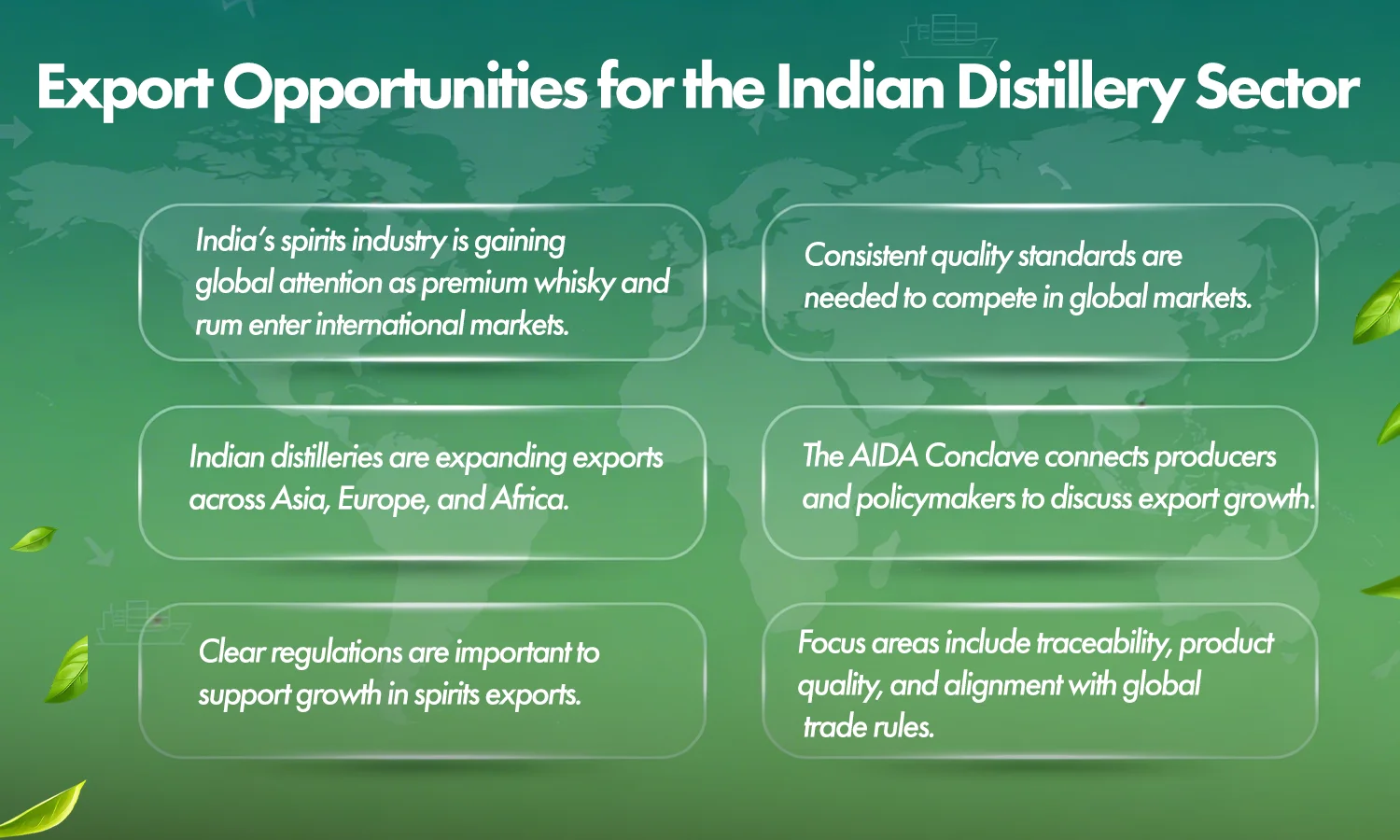
India’s spirits industry is gradually gaining international attention. Premium whisky, rum and other products are reaching new markets across Asia, Europe and Africa.
However, expanding distillery exports from India requires regulatory clarity, consistent quality standards and coordinated industry strategy. The AIDA Conclave provides a platform where producers and policymakers can discuss how the sector can strengthen its export potential.
This includes improving traceability, maintaining product quality and aligning domestic regulations with international trade requirements.
Key Takeaways
♦ Excise frameworks remain one of the most important policy issues for the distillery industry in India.
♦ Producers are managing increasing margin pressures due to cost inflation and regulatory complexity.
♦ Distilleries must balance ethanol production with potable alcohol manufacturing.
♦ Export growth offers a major opportunity for the Indian spirits market.
♦ These discussions will form a central part of the AIDA Conclave 2026 agenda.
Conclusion
The distillery sector is entering a period of structural change. Ethanol blending policies, evolving consumer preferences and global export opportunities are reshaping how companies operate.
At the same time, regulatory clarity remains essential for long-term growth. The AIDA Annual Distillers’ Conclave 2026 provides a forum where policymakers, producers and investors can address these challenges collectively.
By bringing the industry together under one roof, the conclave creates an opportunity to strengthen both ethanol production and the broader distillery ecosystem in India.
FAQ
Why is potable alcohol policy important for the distillery industry?
Potable alcohol policy determines licensing, taxation and distribution rules across different states. These regulations directly influence how distillery companies in India operate and expand.
How does ethanol production affect potable alcohol manufacturing?
Many distilleries produce both fuel ethanol and beverage alcohol. Government programs supporting ethanol blending have increased demand for ethanol, which affects how companies allocate production capacity.
Why are excise policies discussed at AIDA Conclave 2026?
The conclave brings together industry leaders and policymakers to address regulatory challenges. Discussions on alcohol excise policy in India help identify ways to create a more stable environment for distillery growth.