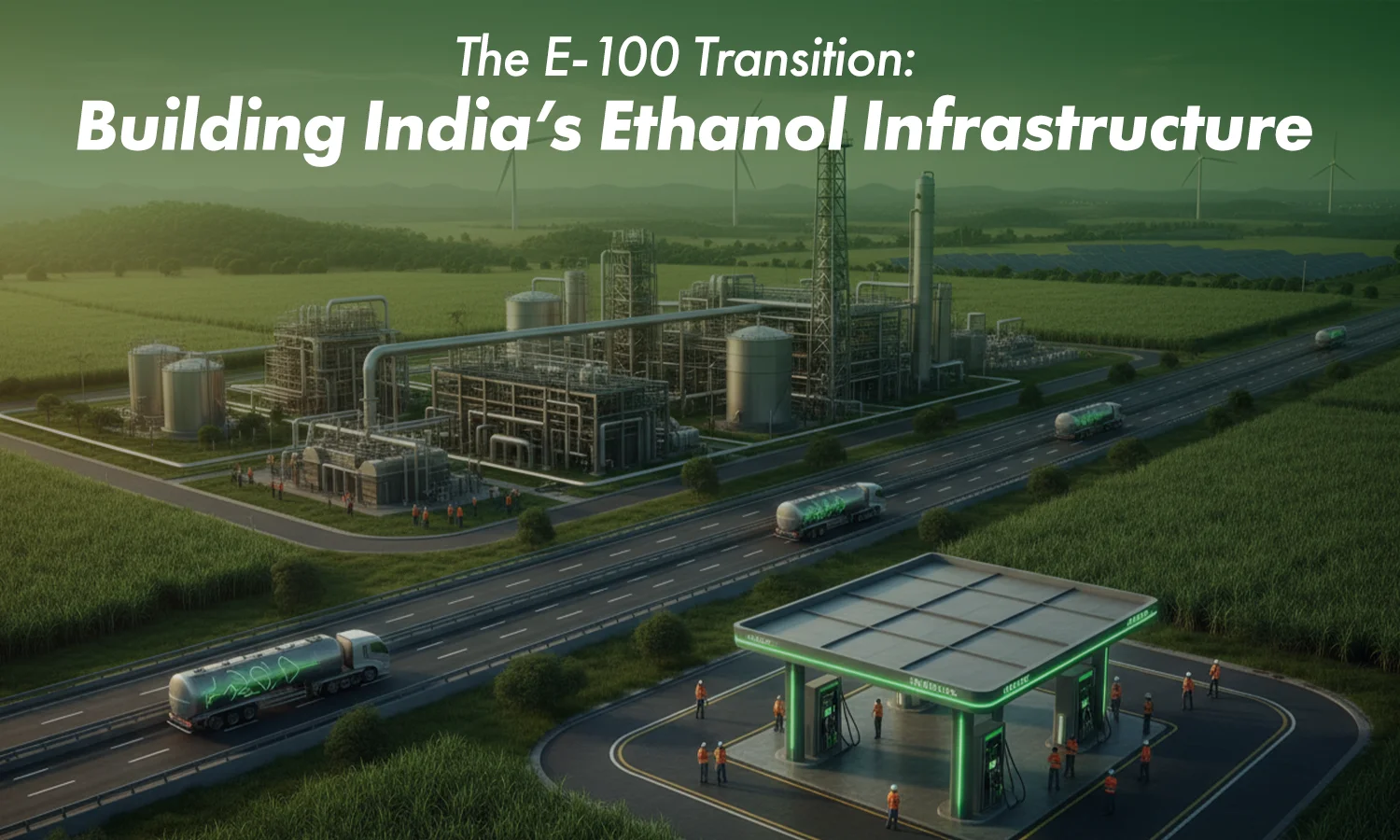
India’s push toward renewable transport fuels is accelerating. Ethanol blending programs have already transformed the country’s fuel strategy, and the next stage of this transition is focused on expanding the infrastructure required for higher ethanol blends.
As discussions move beyond current blending targets, the development of a reliable ethanol supply chain becomes increasingly important. This includes everything from distillery production capacity to logistics networks, storage facilities, and fuel retail systems.
These challenges will be a central theme at the AIDA Annual Distillers’ Conclave 2026, taking place on 24 March at The Grand Hotel in New Delhi, where industry leaders will examine how India can prepare for the next stage of ethanol adoption.
Understanding the Role of Fuel Ethanol
Fuel ethanol has become a key component of India’s renewable energy strategy. By blending ethanol with petrol, the country reduces dependence on imported crude oil while supporting domestic agriculture and industrial production.
The growth of fuel ethanol production has also encouraged new investments in distillery capacity across multiple states. However, increasing production alone is not enough. A coordinated system must ensure that ethanol can move efficiently from production facilities to fuel distribution networks.
Building this system requires strong cooperation between distilleries, logistics providers, oil marketing companies, and policymakers.
Expanding the Ethanol Supply Chain
As the demand for transport grade ethanol continues to rise, supply chain management becomes more complex.
An efficient ethanol supply chain must handle several critical stages:
♦ production at distilleries
♦ transportation to storage facilities
♦ integration into the ethanol distribution network
♦ blending at fuel depots before reaching petrol stations
Each stage must operate smoothly to maintain consistent fuel availability.
The AIDA Conclave provides a platform where industry leaders can discuss how these systems can scale to support higher blending levels and long-term market stability.
Preparing for High Ethanol Blend Fuels
The move toward high ethanol blend fuel, including E-85 and E-100, requires additional adjustments within the fuel ecosystem.
Infrastructure upgrades are necessary to handle the storage and transportation of these fuels safely. Fuel stations, pipelines, and storage terminals must be designed to accommodate higher ethanol concentrations.
At the same time, automotive manufacturers are developing vehicles capable of using these blends through flex-fuel technology.
These developments highlight how ethanol fuel infrastructure must evolve alongside both vehicle technology and distillery production capacity.
Strengthening the Ethanol Distribution Network
The success of India’s ethanol program ultimately depends on the strength of its distribution systems.
A well-structured ethanol distribution network ensures that fuel can reach every part of the country without disruptions. This requires coordination between distilleries producing ethanol and oil marketing companies responsible for blending and retail supply.
At the AIDA Conclave 2026, industry experts will explore how ethanol distribution systems can adapt to growing demand and support the country’s transition toward renewable transport fuels.
Key Takeaways
♦ The transition toward E-100 requires stronger ethanol supply chains.
♦ Fuel ethanol production must be supported by reliable logistics and distribution networks.
♦ Ethanol fuel infrastructure must evolve to handle higher blend fuels.
♦ Cooperation between distilleries, fuel companies, and policymakers is essential.
♦ These discussions will form an important part of the AIDA Conclave 2026.
Conclusion
India’s ethanol program has already made significant progress through increased blending and expanded production capacity. The next stage of growth will depend on how effectively the industry builds the infrastructure required for higher ethanol blends.
By addressing supply chain challenges and strengthening fuel distribution systems, the country can move closer to a future where renewable transport fuels play a central role in the national energy strategy.
The AIDA Annual Distillers’ Conclave 2026 offers a platform where these discussions can take place among industry leaders, policymakers, and technology providers working to shape the future of ethanol mobility in India.
FAQs
What is E-100 fuel?
E-100 refers to fuel composed entirely of ethanol. It is part of the broader category of high ethanol blend fuels designed for use in specially engineered flex-fuel vehicles.
Why is ethanol infrastructure important for fuel blending programs?
Infrastructure such as storage terminals, pipelines, and distribution networks ensures that fuel ethanol can move efficiently from distilleries to fuel stations.
How does ethanol support renewable transport fuels?
Ethanol is produced from agricultural feedstocks and renewable biomass, making it an important component of renewable transport fuels that help reduce dependence on fossil fuels.