
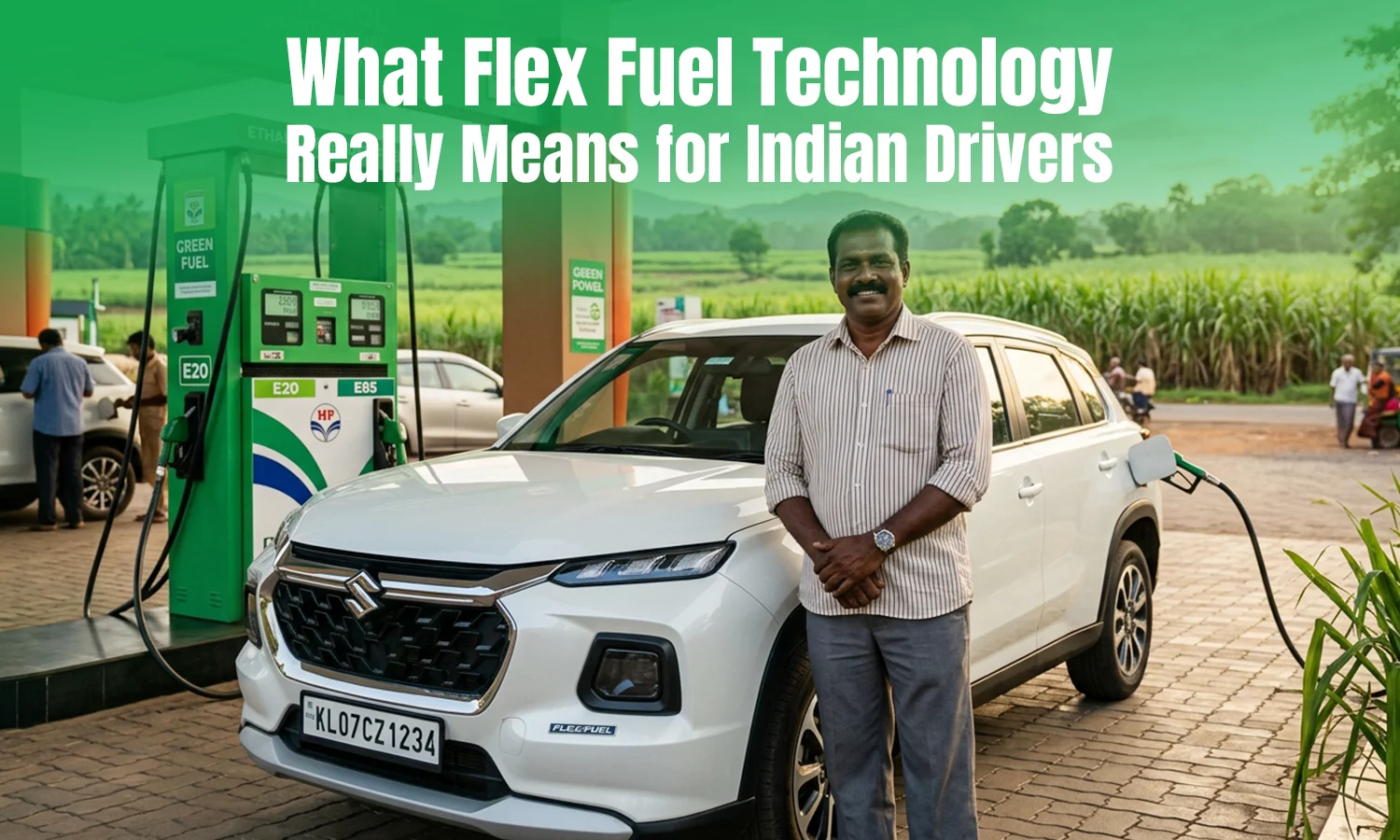
Overview
Flex fuel technology lets a single engine run on petrol, ethanol, or almost any mix of the two. A small sensor reads the ethanol level and the engine adjusts on its own. It sits inside India's wider multi-fuel plan alongside ethanol blended petrol, electric power and other cleaner options.
India has moved quickly on ethanol, reaching roughly 20% blending in the 2024-25 supply year. The natural next question is what happens when petrol carries far more ethanol than that. That is where flex fuel technology enters, and it is worth understanding before the hype gets ahead of the facts.
It explains what flex fuel technology does, how the engine copes with changing fuel, and which common beliefs are simply wrong. For the bigger policy backdrop, our green energy pillar sets out where ethanol fits in India's fuel mix.
What Flex Fuel Technology Is?
At its heart, flex fuel technology is the ability of one engine to accept a wide range of petrol-to-ethanol ratios without any change from the driver. A flex-fuel vehicle can run on ordinary petrol, on ethanol blended petrol, or on very high ethanol mixes up to E85, meaning 85% ethanol.
A normal petrol engine is designed for a fixed narrow range. What people usually mean when they search for a flex fuel converter is a device that turns any car into this kind of vehicle. The honest answer is that true flex engine technology is built in at the factory, with fuel-system parts chosen to handle ethanol safely.
The term flex fuel gas is simply the everyday way many people describe this high-ethanol fuel. In technical language it is a petrol-ethanol mixture, and flex fuel technology is what lets the vehicle burn it cleanly at any ratio in the tank.
How Flex Fuel Technology Works?
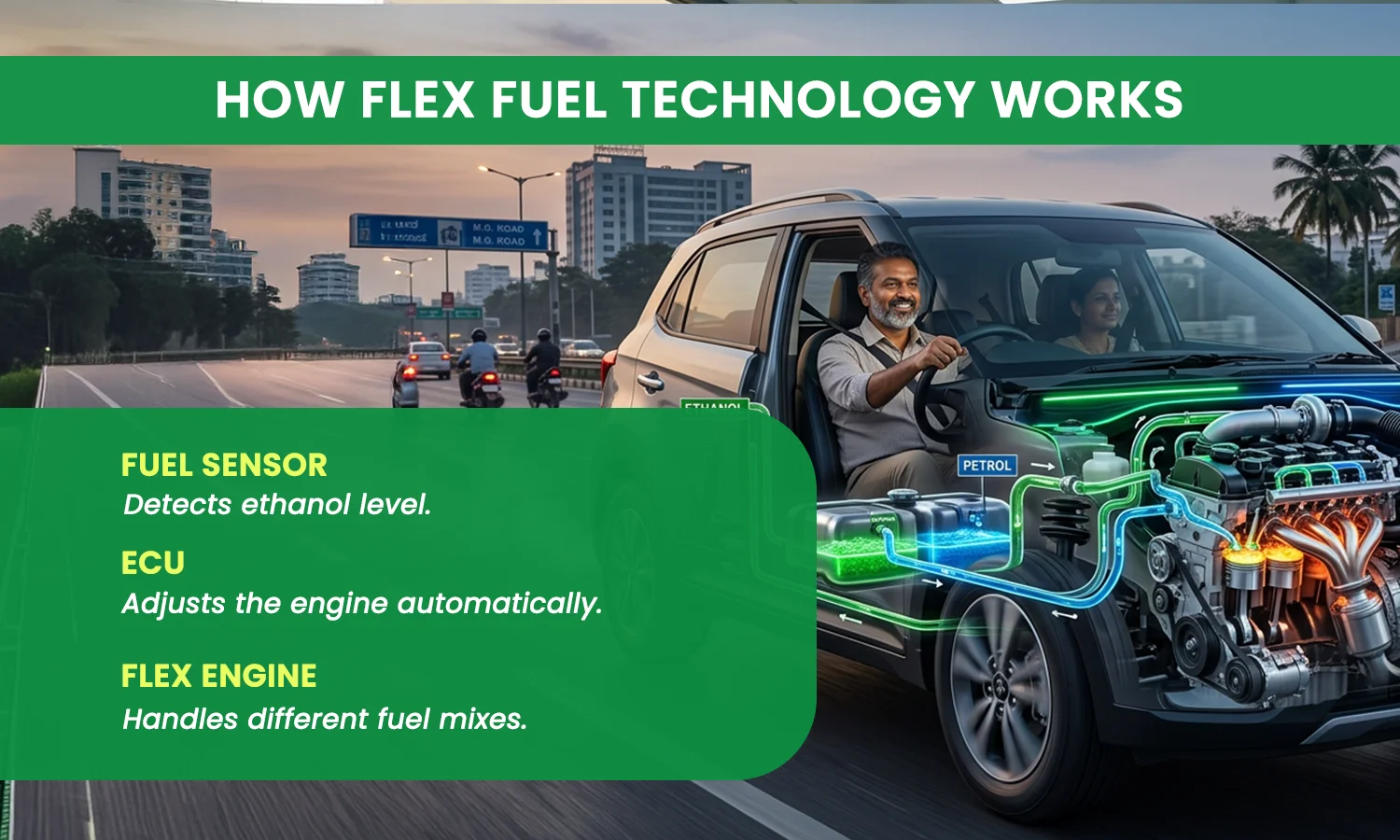
The clever part of flex fuel technology is automatic. A sensor in the fuel line reads how much ethanol is present, and the engine control unit adjusts the fuel injection and ignition timing to suit. The driver simply fills up and drives, with no switches to flip. Our deeper explainer on how flex fuel technology works walks through this step by step.
Because ethanol and petrol burn differently, the engine changes how much fuel it delivers and when it sparks. Flex engine technology handles this many times a second, so performance stays steady as the mix shifts from one refill to the next. This constant tuning is the real core of flex fuel technology, not any single added part.
The fuel system also uses materials that resist ethanol, since higher ethanol content can affect certain seals and metals over time. This is why a genuine flex-fuel vehicle is engineered as a whole, and why a bolt-on flex fuel converter cannot fully replicate factory work.
Ethanol Mixes From E20 to E85
To see where flex fuel technology matters, it helps to compare the fuels India uses and plans to use
| Fuel type |
Ethanol share |
Who can use it |
Regular petrol |
Up to a few per cent |
All petrol vehicles |
|
E20 |
About 20% ethanol |
Modern petrol and flex-fuel vehicles |
E85 |
Up to 85% ethanol |
Flex-fuel vehicles only |
E20 is the standard India has reached nationwide. Ordinary modern cars run on it well, which is why flex fuel technology is not needed for E20 alone. The value of a flex-fuel vehicle appears when the mix climbs well above 20%, toward E85, where a fixed petrol engine could not cope.
People who buy flex fuel capable cars in markets such as Brazil do so for the freedom it brings. The choice to use whatever ratio is cheapest or cleanest on a given day is exactly why many drivers there buy flex fuel vehicles instead of petrol-only ones. Our overview of the flex fuel car looks at how these vehicles behave in daily travel.
Engine Compatibility and Common Misconceptions
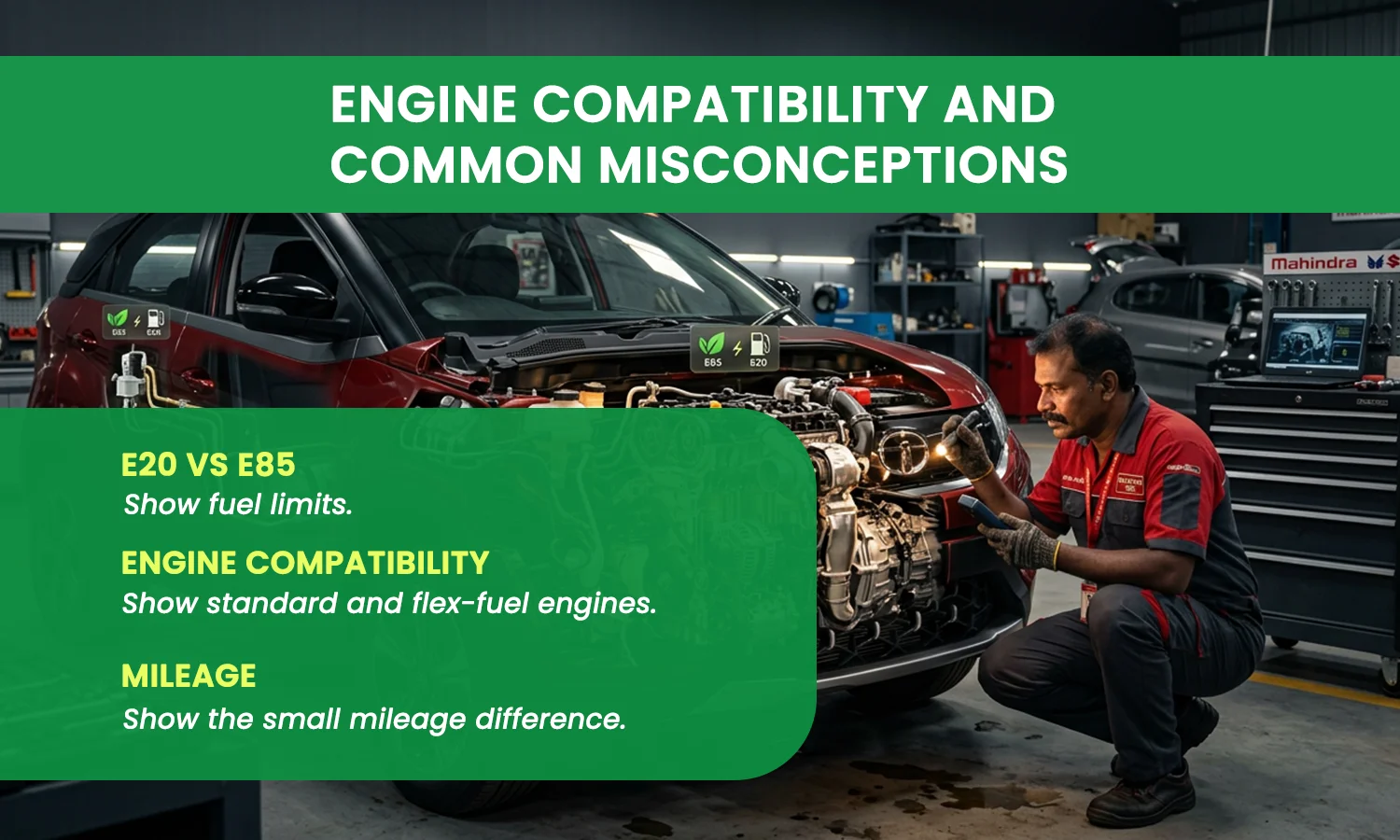
The first misconception is that any car can already handle gas flex fuel at high ethanol levels. It cannot. A standard petrol engine is safe on E20 but not on E85, and pouring very high ethanol mixes into it would be a mistake.
The second myth is about mileage. Ethanol carries less energy per litre than petrol, so very high mixes can slightly lower how far a tank goes. At today's ethanol levels the effect is small for most modern vehicles, and honest reporting matters more than marketing. The advantages of flex fuel still hold, but they are best judged against this trade-off.
A third belief is that a cheap add-on delivers full flex engine technology. In truth, real flex fuel technology is factory work, and the appeal of a flex fuel converter should be weighed carefully against safety and warranty concerns.
India remains at a pilot or early-adoption stage for these vehicles, so gas flex fuel at E85 is not yet a mainstream option at the pump. To see how the fuel side is scaling, our piece on flexfuel ethanol covers production capacity and feedstocks.
Join India's Cleaner-Fuel Journey
Understanding flex fuel technology is one step toward a fuel future that is cleaner, more homegrown, and fairer to farmers. AIDA works to keep this transition honest and evidence-led, presenting ethanol as one strong part of a wider mix rather than a single fix. For more on flex-fuel technology, ethanol and the developments shaping India's fuel transition, head to All India Distillers Association.
Key Takeaways
- Flex fuel technology lets one engine run on any petrol-ethanol ratio up to E85 without driver input.
- A sensor reads the ethanol level and the engine adjusts fuel and timing automatically.
- E20 needs no special vehicle, so the technology matters most for much higher ethanol mixes.
- Very high ethanol content can slightly lower mileage, a trade-off worth stating plainly.
- India is still at an early stage, and ethanol is one part of a broader multi-fuel strategy.
Frequently Asked Questions
Does flex fuel technology work in any petrol car
No. Flex fuel technology is built into vehicles designed for it, with fuel-system parts that handle high ethanol. A standard petrol car is safe on E20 but not on E85 mixes.
Is flex fuel gas bad for the engine
Not in a vehicle made for it. Flex fuel gas burns cleanly in an engine using flex fuel technology, which adjusts automatically. In an ordinary engine, only lower ethanol content such as E20 is appropriate.
Will a flex fuel converter turn my car into a flex-fuel vehicle
An add-on device cannot fully match factory engineering. Genuine capability comes from materials and controls fitted when the car is built, so a converter carries real limits and risks.
Does flex fuel technology reduce mileage
Slightly, at very high ethanol mixes, because ethanol holds less energy per litre. With flex fuel technology at current ethanol levels, the effect on most modern vehicles is small.