
India has reached a major milestone in energy. By early 2026, we successfully achieved an average of 20% ethanol blending in our petrol. This move has already saved the country billions in import costs. However, our 380+ distilleries have been so efficient that we now produce more Ethanol than our current cars can handle. This is where the conversation shifts to what flex fuel is and how it will secure our energy future.
Defining the Flex-Fuel Infrastructure in India
When we discuss what flex fuel is, we are talking about a car that is "fuel-blind." An average car today can handle a small amount of ethanol mixed with petrol. But a flex fuel vehicle is built with a different fuel system and a smart engine computer.
This computer identifies the fuel mix in the tank and adjusts the engine instantly. Whether it is 20% ethanol or 85% ethanol (flexfuel ethanol), the car drives perfectly. For India, this means we can finally use the full capacity of our domestic distilleries without being limited by old engine designs.
The Macro-Economic Value of High-Ethanol Blending
The shift to these engines offers direct benefits that go far beyond just "going green."
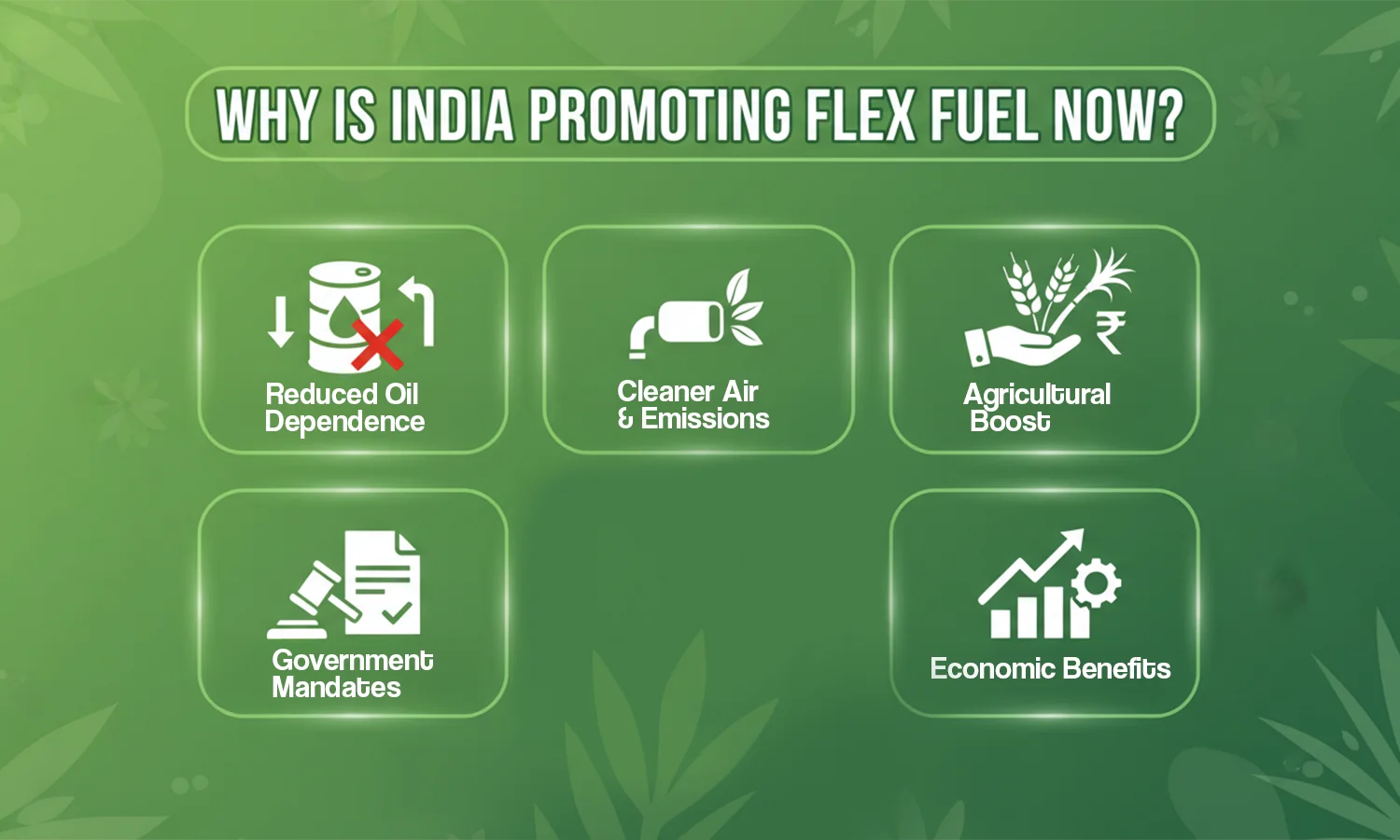
♦ Protecting the National Treasury: India’s oil import bill is nearly ₹22 lakh crore. Every extra litre of ethanol we use is a litre of oil we don't have to buy from abroad. This keeps our wealth inside the country.
♦ A Fairer Fuel Price: The flex fuel price at the pump is generally lower than traditional petrol. Since we grow the raw materials here, we are no longer at the mercy of global oil price spikes.
♦ Engine Efficiency: Ethanol has a natural "octane" advantage. This means it burns more cleanly and can actually give a boost to engine power when the car is designed to use it, as seen in the Toyota Innova Hycross Flex-Fuel, which combines this fuel efficiency with hybrid electric power.
Why India is Prioritising the Flex-Fuel Roadmap Now?
The urgency for this transition stems from a clear reality: India’s ethanol industry has grown faster than the current 20% blending limit can absorb
Managing the Ethanol Surplus
As the apex body for the industry, AIDA is focused on ensuring that the massive investments made by our 380+ member distilleries are fully utilised. Our national production capacity has now reached nearly 2,000 crore litres, yet the current E20 mandate only requires about 1,200 crore litres. To protect this industrial growth and the livelihoods of those involved, we are actively advocating for flex-fuel adoption as the essential "next step" to manage this surplus.
A New Future for Grain Farmers
In the past, ethanol was mostly about sugar. In 2026, the story is about maize (corn) and broken rice. Over 45% of our fuel now comes from grain. This creates a "safety net" for farmers. If they grow too much corn and the food market price drops, they can sell it to a distillery instead. This keeps rural incomes stable.
Policy and Tax Shifts
To make this work, the government is looking at "tax parity." Currently, electric vehicles have a low 5% GST. AIDA and other bodies are pushing for the same 5% tax rate on flex fuel vehicles. This would make these cars affordable for the average family, helping us reach our "Net Zero" goals much faster.
The Strategic Vision: What Flex Fuel Means for 2026 and Beyond
Flex fuel is not just a temporary fix; it is the bridge to total energy independence. As we look ahead, we are even exploring how to use this surplus to create "isobutanol" for diesel engines. By choosing flex fuel, India is moving away from being a buyer of energy and becoming a creator of it. It turns our roads into an extension of our farms, ensuring that our money and our energy stay right here at home.
In Conclusion
At the All India Distillers’ Association, we see flex-fuel as more than just a technical upgrade; it is the key to India’s energy sovereignty. By allowing our vehicles to run on what our farmers grow, we move away from being a nation that buys energy to a nation that creates it.
Our roadmap for 2026 and beyond is clear: we will continue to support the expansion of ethanol dispensing stations and explore even bolder pathways, such as ethanol-diesel blending. Together with the automotive industry and policy-makers, we are ensuring that India’s path to "Net Zero" is built on the strength of our own soil.
Sources for Verification
♦ Petroleum Planning & Analysis Cell (PPAC): For real-time 2026 blending data (19.98% achievement). ppac.gov.in
♦ NITI Aayog: Report on "Scenarios Towards Viksit Bharat" (Feb 2026) regarding transport decarbonization. niti.gov.in
♦ Ministry of Petroleum and Natural Gas (MoPNG): Official statements on Ethanol Blending achievements and foreign exchange savings. mopng.gov.in
♦ All India Distillers' Association (AIDA): Official press release on the 2,000 crore litre capacity milestone and isobutanol research. aidaindia.org
♦ PIB Delhi: Official updates on the Ethanol Blended Petrol (EBP) Programme and the Global Biofuel Alliance. pib.gov.in
FAQ
Is flex fuel the same as ethanol-blended petrol?
No. While both involve ethanol, standard ethanol-blended petrol (like E20) is a fixed ratio for regular engines. Flex fuel refers to a high-concentration blend (up to E85 or E100) that requires a specifically engineered "fuel-blind" engine to operate safely and efficiently.
Is CNG the same as flex-fuel?
No. CNG is a bi-fuel system that stores gas and petrol in separate tanks, switching between them. Flex-fuel vehicles use a single tank where petrol and ethanol are mixed in any proportion; a smart sensor then adjusts the engine's performance based on that specific blend.
Is flex fuel the future?
Yes. For India, it is a strategic necessity. It provides a primary solution for managing our domestic ethanol surplus, supports rural farmer incomes, and offers a practical path to energy independence that works alongside the transition to electric vehicles.